بە شێوازێکی سەردەمیانە بزنس بکە

| پێشنیارێکی تایبەت و سنووردار

گەڕانی پێشکەوتووی بەرهەمەکان
0
سبد خرید خالی است.
چوونەژوور | ناونووسین

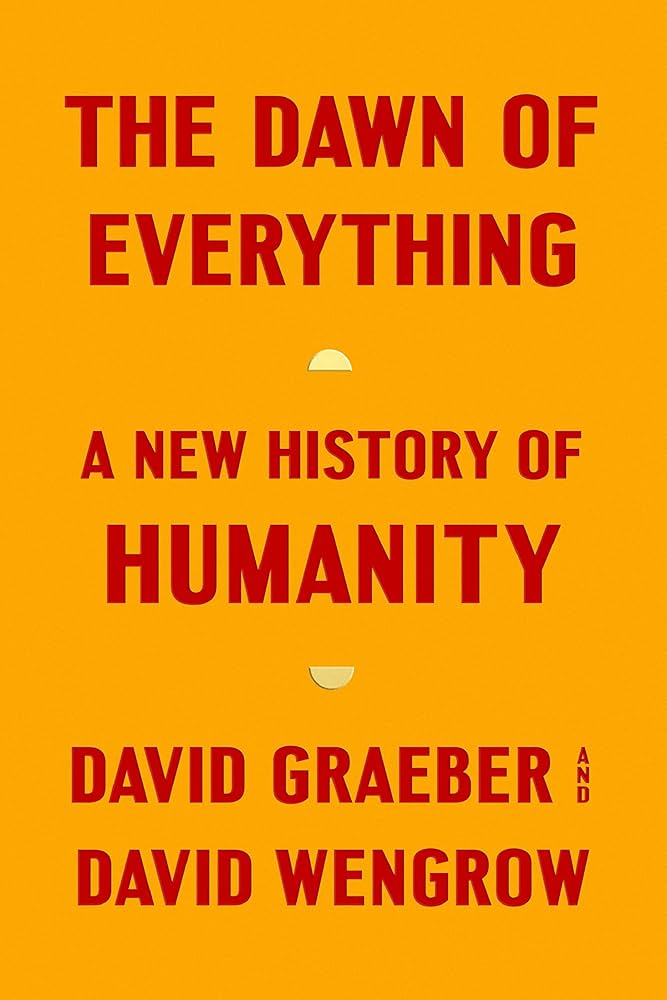
The Dawn of Everything

بەها: {"id":6990,"name":"The Dawn of Everything","slug":"the-dawn-of-everything","date_created":{"date":"2026-02-17 13:43:14.000000","timezone_type":3,"timezone":"Asia\/Baghdad"},"date_modified":{"date":"2026-02-18 15:00:24.000000","timezone_type":3,"timezone":"Asia\/Baghdad"},"status":"publish","featured":false,"catalog_visibility":"visible","description":"

About The Humankind<\/h2>\r\n

A Hopeful History presents a bold reinterpretation of human nature, questioning the widespread belief that people are selfish and driven mainly by competition. Drawing on history, psychology, and real-world case studies, Rutger Bregman revisits famous experiments, historical events, and cultural assumptions that have shaped modern views of humanity.<\/p>\r\n

The book argues that cooperation, trust, and kindness have been central to human survival and success. Bregman explores how institutions, media narratives, and social structures often reinforce cynical views of human behavior, while evidence suggests a more hopeful reality. Combining storytelling with research, Humankind<\/em> offers a compelling case for rethinking society, education, and leadership based on trust in human potential.<\/p>\r\n

\"\"<\/p>\r\n\r\n

About the Author Rutger Bregman<\/h2>\r\n

Rutger Bregman is a Dutch historian, writer, and public intellectual known for his work on social progress, inequality, and human nature. He has written widely on history, economics, and social change, gaining international recognition for presenting optimistic, evidence-based perspectives on society.<\/p>\r\n

Bregman\u2019s work often challenges conventional thinking about human behavior and the future of social systems. Through his writing and public speaking, he advocates for policies and ideas grounded in trust, cooperation, and long-term thinking, making him one of the most prominent contemporary voices on hopeful social change.<\/p>\r\n\r\n

\u0628\u06d5\u0633\u062a\u06d5\u0631\u06d5\u06a9\u0627\u0646\u06cc \u062f\u0627\u0628\u06d5\u0632\u0627\u0646\u062f\u0646\u06cc \u067e\u06d5\u0631\u062a\u0648\u06a9<\/h3>\r\n

\u0641\u0627\u06cc\u0644\u06cc PDF\r\n\u0641\u0627\u06cc\u0644\r\n\u0631\u0627\u06cc\u06af\u0627\u0646<\/h3>\r\n\"\"\r\n\r\n

گرەنتی پشتگیری و نوێکردنەوەی هەمیشەیی
١ ساڵ گرەنتی گەڕاندنەوەی پارە
دامەزراندن لەسەر بێشوومار دۆمەین بەبێ لایسنس
نسخه محصول
1.8.3
پۆلێنی سەرەکی
کتاب
ڕێککەوتی بڵاوکردنەوە
17 شوبات 2026
ڕێککەوتی نوێکردنەوە
18 شوبات 2026
بڕی فرۆشراو
1
کۆدی بەرهەم
6990
Product Description
ناساندنی بەرهەم

About The Dawn of Everything

In The Dawn of Everything, David Graeber and David Wengrow present a sweeping reinterpretation of human history based on recent archaeological and anthropological research. The book challenges long-standing assumptions that human societies evolved in a linear progression from small egalitarian groups to hierarchical states driven by agriculture and urbanization.

Instead, the authors show that early societies displayed remarkable social flexibility, often shifting between different political and economic arrangements. Through evidence from ancient cities, indigenous political traditions, and global historical examples, they argue that inequality and centralized authority are historical choices rather than unavoidable outcomes of development. Bold and thought-provoking, the book invites readers to reconsider the foundations of modern society and the possibilities for alternative social futures.


About the Authors

David Graeber

David Graeber (1961–2020) was an American anthropologist, author, and social theorist known for his work on economic systems, social organization, and political movements. He taught at institutions including Yale University and the London School of Economics and was widely recognized for his influential ideas on inequality, debt, and social change.

David Wengrow

David Wengrow is a British archaeologist and professor of comparative archaeology at University College London. His research focuses on the origins of ancient civilizations, social complexity, and cultural development across early human societies. His work bridges archaeology and anthropology to rethink how human social systems emerged

بەستەرەکانی دابەزاندنی پەرتوک

فایلی PDF
فایل
بەبەرامبەر

user Comments
ڕاوبۆچوونی بەکارهێنەران
1 ڕاوبۆچوون تۆمارکراوە
Ata
بەڕێوەبەر
hey
تۆمارکردنی ڕا