The Intelligence Trap: Why Smart People Make Bad Decisions and How to Make Better Ones<\/em> explores the surprising gap between intelligence and wise thinking. Journalist and science writer David Robson draws on psychology, neuroscience, and real\u2011world examples to reveal how cognitive biases, overconfidence, and narrow expertise can lead even highly intelligent people astray.<\/p>The book explains why traditional measures of intelligence (like IQ) don\u2019t guarantee good decision\u2011making and how smart individuals often fall into reasoning errors such as confirmation bias, groupthink, and overanalyzing. Robson offers practical strategies to improve thinking\u2014including how to embrace uncertainty, question assumptions, consider alternatives, and build better mental habits. The Intelligence Trap<\/em> is both enlightening and accessible, giving readers tools to understand their own thinking and make smarter choices in life, work, and relationships.<\/p>About the Author\u00a0 David Robson<\/h2>David Robson is a British science journalist and author known for writing about psychology, human behavior, and the brain. His work appears in major publications like BBC Future<\/em>, The Atlantic<\/em>, and Nature<\/em>, where he explains complex scientific ideas in engaging, relatable ways. Robson combines rigorous research with compelling storytelling to help readers better understand how the mind works\u2014and how to think more clearly.<\/p>\t\t\n \n \u0628\u06d5\u0633\u062a\u06d5\u0631\u06d5\u06a9\u0627\u0646\u06cc \u062f\u0627\u0628\u06d5\u0632\u0627\u0646\u062f\u0646\u06cc \u067e\u06d5\u0631\u062a\u0648\u06a9 \n <\/h3>\n \n \u0641\u0627\u06cc\u0644\u06cc PDF \n \u0641\u0627\u06cc\u0644 \n \u0631\u0627\u06cc\u06af\u0627\u0646\n <\/a>\n <\/h3>\n <\/p> \n <\/video>","short_description":"Steps to an Ecology of Mind<\/em> is a groundbreaking collection of essays by Gregory Bateson<\/span><\/span> exploring the interconnectedness of mind, nature, and society. Bateson investigates patterns of communication, learning, and thought, showing how ecological and social systems are deeply interdependent.<\/p>","sku":"","global_unique_id":"","price":"0","regular_price":"0","sale_price":"","date_on_sale_from":null,"date_on_sale_to":null,"total_sales":1,"tax_status":"taxable","tax_class":"","manage_stock":false,"stock_quantity":null,"stock_status":"instock","backorders":"no","low_stock_amount":"","sold_individually":false,"weight":"","length":"","width":"","height":"","upsell_ids":[],"cross_sell_ids":[],"parent_id":0,"reviews_allowed":true,"purchase_note":"","attributes":[],"default_attributes":[],"menu_order":0,"post_password":"","virtual":true,"downloadable":true,"category_ids":[76],"tag_ids":[],"brand_ids":[],"shipping_class_id":0,"downloads":{"c94ece47-4f71-44c1-b4b5-68227282961c":{}},"image_id":"6916","gallery_image_ids":[],"download_limit":-1,"download_expiry":-1,"rating_counts":[],"average_rating":"0","review_count":0,"cogs_value":null,"meta_data":[{"id":56325,"key":"_wp_page_template","value":"default"},{"id":56326,"key":"pweb_metabox","value":{"learnpd-userpanel":"1","video-preview-link":"","video-preview-cover":"","students-course":"","progress-course":"75","prerequisite-course":"","item-course":"","selected-items":"","pd-preview":"https:\/\/pishtaz-web.com","pdsell-count":"","item-pd":[{"item-text":"\u0646\u0633\u062e\u0647 \u0645\u062d\u0635\u0648\u0644","item-response":"1.8.3","item-icon":"fas fa-pager"}]}},{"id":56329,"key":"_elementor_edit_mode","value":"builder"},{"id":56330,"key":"_elementor_template_type","value":"product-post"},{"id":56331,"key":"_elementor_version","value":"3.35.4"},{"id":56332,"key":"_elementor_pro_version","value":"3.35.1"},{"id":56333,"key":"_elementor_data","value":"[{\"id\":\"30602ea\",\"elType\":\"section\",\"settings\":{\"css_classes\":\"content-collapse\",\"ha_cmc_text\":\"Happy Addons\"},\"elements\":[{\"id\":\"4328257\",\"elType\":\"column\",\"settings\":{\"_column_size\":\"100\",\"_inline_size\":null,\"ha_cmc_text\":\"Happy Addons\"},\"elements\":[{\"id\":\"34bf8cd\",\"elType\":\"widget\",\"settings\":{\"editor\":\"About The\\u00a0Intelligence Trap<\\\/h2>The Intelligence Trap: Why Smart People Make Bad Decisions and How to Make Better Ones<\\\/em> explores the surprising gap between intelligence and wise thinking. Journalist and science writer David Robson<\\\/span><\\\/span> draws on psychology, neuroscience, and real\\u2011world examples to reveal how cognitive biases, overconfidence, and narrow expertise can lead even highly intelligent people astray.<\\\/p>The book explains why traditional measures of intelligence (like IQ) don\\u2019t guarantee good decision\\u2011making and how smart individuals often fall into reasoning errors such as confirmation bias, groupthink, and overanalyzing. Robson offers practical strategies to improve thinking\\u2014including how to embrace uncertainty, question assumptions, consider alternatives, and build better mental habits. The Intelligence Trap<\\\/em> is both enlightening and accessible, giving readers tools to understand their own thinking and make smarter choices in life, work, and relationships.<\\\/p>About the Author\\u00a0 David Robson<\\\/h2>David Robson<\\\/span><\\\/span> is a British science journalist and author known for writing about psychology, human behavior, and the brain. His work appears in major publications like BBC Future<\\\/em>, The Atlantic<\\\/em>, and Nature<\\\/em>, where he explains complex scientific ideas in engaging, relatable ways. Robson combines rigorous research with compelling storytelling to help readers better understand how the mind works\\u2014and how to think more clearly.<\\\/p>\",\"column_gap\":{\"unit\":\"px\",\"size\":\"0\",\"sizes\":[]},\"ha_advanced_tooltip_content\":\"I am a tooltip\",\"ha_cmc_text\":\"Happy Addons\"},\"elements\":[],\"widgetType\":\"text-editor\"}],\"isInner\":false}],\"isInner\":false},{\"id\":\"5c11af4\",\"elType\":\"section\",\"settings\":{\"ha_cmc_text\":\"Happy Addons\"},\"elements\":[{\"id\":\"a638148\",\"elType\":\"column\",\"settings\":{\"_column_size\":\"100\",\"_inline_size\":null,\"ha_cmc_text\":\"Happy Addons\"},\"elements\":[{\"id\":\"24306bf\",\"elType\":\"widget\",\"settings\":{\"lessons-part-icon\":{\"value\":\"fas fa-book-open\",\"library\":\"fa-solid\"},\"lessons-part-title\":\"\\u0628\\u06d5\\u0633\\u062a\\u06d5\\u0631\\u06d5\\u06a9\\u0627\\u0646\\u06cc \\u062f\\u0627\\u0628\\u06d5\\u0632\\u0627\\u0646\\u062f\\u0646\\u06cc \\u067e\\u06d5\\u0631\\u062a\\u0648\\u06a9\",\"lessons_list\":[{\"lesson_title\":\"\\u0641\\u0627\\u06cc\\u0644\\u06cc PDF\",\"lesson_icon\":{\"value\":\"far fa-file-pdf\",\"library\":\"fa-regular\"},\"lesson_label\":\"file\",\"lesson_content\":\"<\\\/p>\",\"_id\":\"32acdec\",\"lesson_status\":\"free\",\"lesson_link\":{\"url\":\"https:\\\/\\\/atasharifi.com\\\/wp-content\\\/uploads\\\/woocommerce_uploads\\\/2023\\\/04\\\/Noise-by-Daniel-Kahneman-PDF-cgdrmb.pdf\",\"is_external\":\"\",\"nofollow\":\"\",\"custom_attributes\":\"\"}}],\"ha_advanced_tooltip_content\":\"I am a tooltip\",\"ha_cmc_text\":\"Happy Addons\"},\"elements\":[],\"widgetType\":\"pweb_lesson\"}],\"isInner\":false}],\"isInner\":false}]"},{"id":56335,"key":"_rcp_woo_access_level_to_purchase","value":"0"},{"id":56336,"key":"_rcp_woo_access_level_to_view","value":"0"},{"id":56340,"key":"_elementor_page_settings","value":{"ha_grid_zindex":"1000"}},{"id":56342,"key":"_happyaddons_elements_cache","value":[]},{"id":61483,"key":"_elementor_controls_usage","value":{"text-editor":{"count":1,"control_percent":0,"controls":{"content":{"section_editor":{"editor":1,"column_gap":1}}}},"column":{"count":2,"control_percent":0,"controls":{"layout":{"layout":{"_inline_size":2}}}},"section":{"count":2,"control_percent":0,"controls":{"advanced":{"section_advanced":{"css_classes":1}}}},"pweb_lesson":{"count":1,"control_percent":0,"controls":{"content":{"part_section":{"lessons-part-icon":1,"lessons-part-title":1},"lessons_section":{"lessons_list":1}}}}}},{"id":72382,"key":"_elementor_page_assets","value":{"scripts":["elementor-frontend"]}},{"id":72383,"key":"_elementor_css","value":{"time":1773488527,"fonts":[],"icons":["fa-solid","fa-regular"],"dynamic_elements_ids":[],"status":"file","0":""}},{"id":72384,"key":"_elementor_element_cache","value":"{\"timeout\":1773723204,\"value\":{\"content\":\"\\t\\t\\n\\t\\t\\t\\t\\t\\t\\n\\t\\t\\t\\t\\t\\n\\t\\t\\t\\n\\t\\t\\t\\t\\t\\t\\t<\\\/div>\\n\\t\\t<\\\/div>\\n\\t\\t\\t\\t\\t<\\\/div>\\n\\t\\t<\\\/section>\\n\\t\\t\\t\\t\\n\\t\\t\\t\\t\\t\\t\\n\\t\\t\\t\\t\\t\\n\\t\\t\\t\\n\\t\\t\\t\\t\\t\\t\\t<\\\/div>\\n\\t\\t<\\\/div>\\n\\t\\t\\t\\t\\t<\\\/div>\\n\\t\\t<\\\/section>\\n\\t\\t\",\"scripts\":[],\"styles\":[]}}"}]} گرەنتی پشتگیری و نوێکردنەوەی هەمیشەیی ١ ساڵ گرەنتی گەڕاندنەوەی پارە دامەزراندن لەسەر بێشوومار دۆمەین بەبێ لایسنس بینینی نموونە زیادکردن بۆ سەبەتە خستنە ناو دڵخوازەکان نسخه محصول 1.8.3 پۆلێنی سەرەکی کتاب ڕێککەوتی بڵاوکردنەوە 17 شوبات 2026 ڕێککەوتی نوێکردنەوە 17 شوبات 2026 بڕی فرۆشراو 1 کۆدی بەرهەم 6912
The book explains why traditional measures of intelligence (like IQ) don\u2019t guarantee good decision\u2011making and how smart individuals often fall into reasoning errors such as confirmation bias, groupthink, and overanalyzing. Robson offers practical strategies to improve thinking\u2014including how to embrace uncertainty, question assumptions, consider alternatives, and build better mental habits. The Intelligence Trap<\/em> is both enlightening and accessible, giving readers tools to understand their own thinking and make smarter choices in life, work, and relationships.<\/p>About the Author\u00a0 David Robson<\/h2>David Robson is a British science journalist and author known for writing about psychology, human behavior, and the brain. His work appears in major publications like BBC Future<\/em>, The Atlantic<\/em>, and Nature<\/em>, where he explains complex scientific ideas in engaging, relatable ways. Robson combines rigorous research with compelling storytelling to help readers better understand how the mind works\u2014and how to think more clearly.<\/p>\t\t\n \n \u0628\u06d5\u0633\u062a\u06d5\u0631\u06d5\u06a9\u0627\u0646\u06cc \u062f\u0627\u0628\u06d5\u0632\u0627\u0646\u062f\u0646\u06cc \u067e\u06d5\u0631\u062a\u0648\u06a9 \n <\/h3>\n \n \u0641\u0627\u06cc\u0644\u06cc PDF \n \u0641\u0627\u06cc\u0644 \n \u0631\u0627\u06cc\u06af\u0627\u0646\n <\/a>\n <\/h3>\n <\/p> \n <\/video>","short_description":"Steps to an Ecology of Mind<\/em> is a groundbreaking collection of essays by Gregory Bateson<\/span><\/span> exploring the interconnectedness of mind, nature, and society. Bateson investigates patterns of communication, learning, and thought, showing how ecological and social systems are deeply interdependent.<\/p>","sku":"","global_unique_id":"","price":"0","regular_price":"0","sale_price":"","date_on_sale_from":null,"date_on_sale_to":null,"total_sales":1,"tax_status":"taxable","tax_class":"","manage_stock":false,"stock_quantity":null,"stock_status":"instock","backorders":"no","low_stock_amount":"","sold_individually":false,"weight":"","length":"","width":"","height":"","upsell_ids":[],"cross_sell_ids":[],"parent_id":0,"reviews_allowed":true,"purchase_note":"","attributes":[],"default_attributes":[],"menu_order":0,"post_password":"","virtual":true,"downloadable":true,"category_ids":[76],"tag_ids":[],"brand_ids":[],"shipping_class_id":0,"downloads":{"c94ece47-4f71-44c1-b4b5-68227282961c":{}},"image_id":"6916","gallery_image_ids":[],"download_limit":-1,"download_expiry":-1,"rating_counts":[],"average_rating":"0","review_count":0,"cogs_value":null,"meta_data":[{"id":56325,"key":"_wp_page_template","value":"default"},{"id":56326,"key":"pweb_metabox","value":{"learnpd-userpanel":"1","video-preview-link":"","video-preview-cover":"","students-course":"","progress-course":"75","prerequisite-course":"","item-course":"","selected-items":"","pd-preview":"https:\/\/pishtaz-web.com","pdsell-count":"","item-pd":[{"item-text":"\u0646\u0633\u062e\u0647 \u0645\u062d\u0635\u0648\u0644","item-response":"1.8.3","item-icon":"fas fa-pager"}]}},{"id":56329,"key":"_elementor_edit_mode","value":"builder"},{"id":56330,"key":"_elementor_template_type","value":"product-post"},{"id":56331,"key":"_elementor_version","value":"3.35.4"},{"id":56332,"key":"_elementor_pro_version","value":"3.35.1"},{"id":56333,"key":"_elementor_data","value":"[{\"id\":\"30602ea\",\"elType\":\"section\",\"settings\":{\"css_classes\":\"content-collapse\",\"ha_cmc_text\":\"Happy Addons\"},\"elements\":[{\"id\":\"4328257\",\"elType\":\"column\",\"settings\":{\"_column_size\":\"100\",\"_inline_size\":null,\"ha_cmc_text\":\"Happy Addons\"},\"elements\":[{\"id\":\"34bf8cd\",\"elType\":\"widget\",\"settings\":{\"editor\":\"About The\\u00a0Intelligence Trap<\\\/h2>The Intelligence Trap: Why Smart People Make Bad Decisions and How to Make Better Ones<\\\/em> explores the surprising gap between intelligence and wise thinking. Journalist and science writer David Robson<\\\/span><\\\/span> draws on psychology, neuroscience, and real\\u2011world examples to reveal how cognitive biases, overconfidence, and narrow expertise can lead even highly intelligent people astray.<\\\/p>The book explains why traditional measures of intelligence (like IQ) don\\u2019t guarantee good decision\\u2011making and how smart individuals often fall into reasoning errors such as confirmation bias, groupthink, and overanalyzing. Robson offers practical strategies to improve thinking\\u2014including how to embrace uncertainty, question assumptions, consider alternatives, and build better mental habits. The Intelligence Trap<\\\/em> is both enlightening and accessible, giving readers tools to understand their own thinking and make smarter choices in life, work, and relationships.<\\\/p>About the Author\\u00a0 David Robson<\\\/h2>David Robson<\\\/span><\\\/span> is a British science journalist and author known for writing about psychology, human behavior, and the brain. His work appears in major publications like BBC Future<\\\/em>, The Atlantic<\\\/em>, and Nature<\\\/em>, where he explains complex scientific ideas in engaging, relatable ways. Robson combines rigorous research with compelling storytelling to help readers better understand how the mind works\\u2014and how to think more clearly.<\\\/p>\",\"column_gap\":{\"unit\":\"px\",\"size\":\"0\",\"sizes\":[]},\"ha_advanced_tooltip_content\":\"I am a tooltip\",\"ha_cmc_text\":\"Happy Addons\"},\"elements\":[],\"widgetType\":\"text-editor\"}],\"isInner\":false}],\"isInner\":false},{\"id\":\"5c11af4\",\"elType\":\"section\",\"settings\":{\"ha_cmc_text\":\"Happy Addons\"},\"elements\":[{\"id\":\"a638148\",\"elType\":\"column\",\"settings\":{\"_column_size\":\"100\",\"_inline_size\":null,\"ha_cmc_text\":\"Happy Addons\"},\"elements\":[{\"id\":\"24306bf\",\"elType\":\"widget\",\"settings\":{\"lessons-part-icon\":{\"value\":\"fas fa-book-open\",\"library\":\"fa-solid\"},\"lessons-part-title\":\"\\u0628\\u06d5\\u0633\\u062a\\u06d5\\u0631\\u06d5\\u06a9\\u0627\\u0646\\u06cc \\u062f\\u0627\\u0628\\u06d5\\u0632\\u0627\\u0646\\u062f\\u0646\\u06cc \\u067e\\u06d5\\u0631\\u062a\\u0648\\u06a9\",\"lessons_list\":[{\"lesson_title\":\"\\u0641\\u0627\\u06cc\\u0644\\u06cc PDF\",\"lesson_icon\":{\"value\":\"far fa-file-pdf\",\"library\":\"fa-regular\"},\"lesson_label\":\"file\",\"lesson_content\":\"<\\\/p>\",\"_id\":\"32acdec\",\"lesson_status\":\"free\",\"lesson_link\":{\"url\":\"https:\\\/\\\/atasharifi.com\\\/wp-content\\\/uploads\\\/woocommerce_uploads\\\/2023\\\/04\\\/Noise-by-Daniel-Kahneman-PDF-cgdrmb.pdf\",\"is_external\":\"\",\"nofollow\":\"\",\"custom_attributes\":\"\"}}],\"ha_advanced_tooltip_content\":\"I am a tooltip\",\"ha_cmc_text\":\"Happy Addons\"},\"elements\":[],\"widgetType\":\"pweb_lesson\"}],\"isInner\":false}],\"isInner\":false}]"},{"id":56335,"key":"_rcp_woo_access_level_to_purchase","value":"0"},{"id":56336,"key":"_rcp_woo_access_level_to_view","value":"0"},{"id":56340,"key":"_elementor_page_settings","value":{"ha_grid_zindex":"1000"}},{"id":56342,"key":"_happyaddons_elements_cache","value":[]},{"id":61483,"key":"_elementor_controls_usage","value":{"text-editor":{"count":1,"control_percent":0,"controls":{"content":{"section_editor":{"editor":1,"column_gap":1}}}},"column":{"count":2,"control_percent":0,"controls":{"layout":{"layout":{"_inline_size":2}}}},"section":{"count":2,"control_percent":0,"controls":{"advanced":{"section_advanced":{"css_classes":1}}}},"pweb_lesson":{"count":1,"control_percent":0,"controls":{"content":{"part_section":{"lessons-part-icon":1,"lessons-part-title":1},"lessons_section":{"lessons_list":1}}}}}},{"id":72382,"key":"_elementor_page_assets","value":{"scripts":["elementor-frontend"]}},{"id":72383,"key":"_elementor_css","value":{"time":1773488527,"fonts":[],"icons":["fa-solid","fa-regular"],"dynamic_elements_ids":[],"status":"file","0":""}},{"id":72384,"key":"_elementor_element_cache","value":"{\"timeout\":1773723204,\"value\":{\"content\":\"\\t\\t\\n\\t\\t\\t\\t\\t\\t\\n\\t\\t\\t\\t\\t\\n\\t\\t\\t\\n\\t\\t\\t\\t\\t\\t\\t<\\\/div>\\n\\t\\t<\\\/div>\\n\\t\\t\\t\\t\\t<\\\/div>\\n\\t\\t<\\\/section>\\n\\t\\t\\t\\t\\n\\t\\t\\t\\t\\t\\t\\n\\t\\t\\t\\t\\t\\n\\t\\t\\t\\n\\t\\t\\t\\t\\t\\t\\t<\\\/div>\\n\\t\\t<\\\/div>\\n\\t\\t\\t\\t\\t<\\\/div>\\n\\t\\t<\\\/section>\\n\\t\\t\",\"scripts\":[],\"styles\":[]}}"}]} گرەنتی پشتگیری و نوێکردنەوەی هەمیشەیی ١ ساڵ گرەنتی گەڕاندنەوەی پارە دامەزراندن لەسەر بێشوومار دۆمەین بەبێ لایسنس بینینی نموونە زیادکردن بۆ سەبەتە خستنە ناو دڵخوازەکان نسخه محصول 1.8.3 پۆلێنی سەرەکی کتاب ڕێککەوتی بڵاوکردنەوە 17 شوبات 2026 ڕێککەوتی نوێکردنەوە 17 شوبات 2026 بڕی فرۆشراو 1 کۆدی بەرهەم 6912
David Robson is a British science journalist and author known for writing about psychology, human behavior, and the brain. His work appears in major publications like BBC Future<\/em>, The Atlantic<\/em>, and Nature<\/em>, where he explains complex scientific ideas in engaging, relatable ways. Robson combines rigorous research with compelling storytelling to help readers better understand how the mind works\u2014and how to think more clearly.<\/p>\t\t\n \n \u0628\u06d5\u0633\u062a\u06d5\u0631\u06d5\u06a9\u0627\u0646\u06cc \u062f\u0627\u0628\u06d5\u0632\u0627\u0646\u062f\u0646\u06cc \u067e\u06d5\u0631\u062a\u0648\u06a9 \n <\/h3>\n \n \u0641\u0627\u06cc\u0644\u06cc PDF \n \u0641\u0627\u06cc\u0644 \n \u0631\u0627\u06cc\u06af\u0627\u0646\n <\/a>\n <\/h3>\n <\/p> \n <\/video>","short_description":"Steps to an Ecology of Mind<\/em> is a groundbreaking collection of essays by Gregory Bateson<\/span><\/span> exploring the interconnectedness of mind, nature, and society. Bateson investigates patterns of communication, learning, and thought, showing how ecological and social systems are deeply interdependent.<\/p>","sku":"","global_unique_id":"","price":"0","regular_price":"0","sale_price":"","date_on_sale_from":null,"date_on_sale_to":null,"total_sales":1,"tax_status":"taxable","tax_class":"","manage_stock":false,"stock_quantity":null,"stock_status":"instock","backorders":"no","low_stock_amount":"","sold_individually":false,"weight":"","length":"","width":"","height":"","upsell_ids":[],"cross_sell_ids":[],"parent_id":0,"reviews_allowed":true,"purchase_note":"","attributes":[],"default_attributes":[],"menu_order":0,"post_password":"","virtual":true,"downloadable":true,"category_ids":[76],"tag_ids":[],"brand_ids":[],"shipping_class_id":0,"downloads":{"c94ece47-4f71-44c1-b4b5-68227282961c":{}},"image_id":"6916","gallery_image_ids":[],"download_limit":-1,"download_expiry":-1,"rating_counts":[],"average_rating":"0","review_count":0,"cogs_value":null,"meta_data":[{"id":56325,"key":"_wp_page_template","value":"default"},{"id":56326,"key":"pweb_metabox","value":{"learnpd-userpanel":"1","video-preview-link":"","video-preview-cover":"","students-course":"","progress-course":"75","prerequisite-course":"","item-course":"","selected-items":"","pd-preview":"https:\/\/pishtaz-web.com","pdsell-count":"","item-pd":[{"item-text":"\u0646\u0633\u062e\u0647 \u0645\u062d\u0635\u0648\u0644","item-response":"1.8.3","item-icon":"fas fa-pager"}]}},{"id":56329,"key":"_elementor_edit_mode","value":"builder"},{"id":56330,"key":"_elementor_template_type","value":"product-post"},{"id":56331,"key":"_elementor_version","value":"3.35.4"},{"id":56332,"key":"_elementor_pro_version","value":"3.35.1"},{"id":56333,"key":"_elementor_data","value":"[{\"id\":\"30602ea\",\"elType\":\"section\",\"settings\":{\"css_classes\":\"content-collapse\",\"ha_cmc_text\":\"Happy Addons\"},\"elements\":[{\"id\":\"4328257\",\"elType\":\"column\",\"settings\":{\"_column_size\":\"100\",\"_inline_size\":null,\"ha_cmc_text\":\"Happy Addons\"},\"elements\":[{\"id\":\"34bf8cd\",\"elType\":\"widget\",\"settings\":{\"editor\":\"About The\\u00a0Intelligence Trap<\\\/h2>The Intelligence Trap: Why Smart People Make Bad Decisions and How to Make Better Ones<\\\/em> explores the surprising gap between intelligence and wise thinking. Journalist and science writer David Robson<\\\/span><\\\/span> draws on psychology, neuroscience, and real\\u2011world examples to reveal how cognitive biases, overconfidence, and narrow expertise can lead even highly intelligent people astray.<\\\/p>The book explains why traditional measures of intelligence (like IQ) don\\u2019t guarantee good decision\\u2011making and how smart individuals often fall into reasoning errors such as confirmation bias, groupthink, and overanalyzing. Robson offers practical strategies to improve thinking\\u2014including how to embrace uncertainty, question assumptions, consider alternatives, and build better mental habits. The Intelligence Trap<\\\/em> is both enlightening and accessible, giving readers tools to understand their own thinking and make smarter choices in life, work, and relationships.<\\\/p>About the Author\\u00a0 David Robson<\\\/h2>David Robson<\\\/span><\\\/span> is a British science journalist and author known for writing about psychology, human behavior, and the brain. His work appears in major publications like BBC Future<\\\/em>, The Atlantic<\\\/em>, and Nature<\\\/em>, where he explains complex scientific ideas in engaging, relatable ways. Robson combines rigorous research with compelling storytelling to help readers better understand how the mind works\\u2014and how to think more clearly.<\\\/p>\",\"column_gap\":{\"unit\":\"px\",\"size\":\"0\",\"sizes\":[]},\"ha_advanced_tooltip_content\":\"I am a tooltip\",\"ha_cmc_text\":\"Happy Addons\"},\"elements\":[],\"widgetType\":\"text-editor\"}],\"isInner\":false}],\"isInner\":false},{\"id\":\"5c11af4\",\"elType\":\"section\",\"settings\":{\"ha_cmc_text\":\"Happy Addons\"},\"elements\":[{\"id\":\"a638148\",\"elType\":\"column\",\"settings\":{\"_column_size\":\"100\",\"_inline_size\":null,\"ha_cmc_text\":\"Happy Addons\"},\"elements\":[{\"id\":\"24306bf\",\"elType\":\"widget\",\"settings\":{\"lessons-part-icon\":{\"value\":\"fas fa-book-open\",\"library\":\"fa-solid\"},\"lessons-part-title\":\"\\u0628\\u06d5\\u0633\\u062a\\u06d5\\u0631\\u06d5\\u06a9\\u0627\\u0646\\u06cc \\u062f\\u0627\\u0628\\u06d5\\u0632\\u0627\\u0646\\u062f\\u0646\\u06cc \\u067e\\u06d5\\u0631\\u062a\\u0648\\u06a9\",\"lessons_list\":[{\"lesson_title\":\"\\u0641\\u0627\\u06cc\\u0644\\u06cc PDF\",\"lesson_icon\":{\"value\":\"far fa-file-pdf\",\"library\":\"fa-regular\"},\"lesson_label\":\"file\",\"lesson_content\":\"<\\\/p>\",\"_id\":\"32acdec\",\"lesson_status\":\"free\",\"lesson_link\":{\"url\":\"https:\\\/\\\/atasharifi.com\\\/wp-content\\\/uploads\\\/woocommerce_uploads\\\/2023\\\/04\\\/Noise-by-Daniel-Kahneman-PDF-cgdrmb.pdf\",\"is_external\":\"\",\"nofollow\":\"\",\"custom_attributes\":\"\"}}],\"ha_advanced_tooltip_content\":\"I am a tooltip\",\"ha_cmc_text\":\"Happy Addons\"},\"elements\":[],\"widgetType\":\"pweb_lesson\"}],\"isInner\":false}],\"isInner\":false}]"},{"id":56335,"key":"_rcp_woo_access_level_to_purchase","value":"0"},{"id":56336,"key":"_rcp_woo_access_level_to_view","value":"0"},{"id":56340,"key":"_elementor_page_settings","value":{"ha_grid_zindex":"1000"}},{"id":56342,"key":"_happyaddons_elements_cache","value":[]},{"id":61483,"key":"_elementor_controls_usage","value":{"text-editor":{"count":1,"control_percent":0,"controls":{"content":{"section_editor":{"editor":1,"column_gap":1}}}},"column":{"count":2,"control_percent":0,"controls":{"layout":{"layout":{"_inline_size":2}}}},"section":{"count":2,"control_percent":0,"controls":{"advanced":{"section_advanced":{"css_classes":1}}}},"pweb_lesson":{"count":1,"control_percent":0,"controls":{"content":{"part_section":{"lessons-part-icon":1,"lessons-part-title":1},"lessons_section":{"lessons_list":1}}}}}},{"id":72382,"key":"_elementor_page_assets","value":{"scripts":["elementor-frontend"]}},{"id":72383,"key":"_elementor_css","value":{"time":1773488527,"fonts":[],"icons":["fa-solid","fa-regular"],"dynamic_elements_ids":[],"status":"file","0":""}},{"id":72384,"key":"_elementor_element_cache","value":"{\"timeout\":1773723204,\"value\":{\"content\":\"\\t\\t\\n\\t\\t\\t\\t\\t\\t\\n\\t\\t\\t\\t\\t\\n\\t\\t\\t\\n\\t\\t\\t\\t\\t\\t\\t<\\\/div>\\n\\t\\t<\\\/div>\\n\\t\\t\\t\\t\\t<\\\/div>\\n\\t\\t<\\\/section>\\n\\t\\t\\t\\t\\n\\t\\t\\t\\t\\t\\t\\n\\t\\t\\t\\t\\t\\n\\t\\t\\t\\n\\t\\t\\t\\t\\t\\t\\t<\\\/div>\\n\\t\\t<\\\/div>\\n\\t\\t\\t\\t\\t<\\\/div>\\n\\t\\t<\\\/section>\\n\\t\\t\",\"scripts\":[],\"styles\":[]}}"}]} گرەنتی پشتگیری و نوێکردنەوەی هەمیشەیی ١ ساڵ گرەنتی گەڕاندنەوەی پارە دامەزراندن لەسەر بێشوومار دۆمەین بەبێ لایسنس بینینی نموونە زیادکردن بۆ سەبەتە خستنە ناو دڵخوازەکان نسخه محصول 1.8.3 پۆلێنی سەرەکی کتاب ڕێککەوتی بڵاوکردنەوە 17 شوبات 2026 ڕێککەوتی نوێکردنەوە 17 شوبات 2026 بڕی فرۆشراو 1 کۆدی بەرهەم 6912
<\/p> \n <\/video>","short_description":"Steps to an Ecology of Mind<\/em> is a groundbreaking collection of essays by Gregory Bateson<\/span><\/span> exploring the interconnectedness of mind, nature, and society. Bateson investigates patterns of communication, learning, and thought, showing how ecological and social systems are deeply interdependent.<\/p>","sku":"","global_unique_id":"","price":"0","regular_price":"0","sale_price":"","date_on_sale_from":null,"date_on_sale_to":null,"total_sales":1,"tax_status":"taxable","tax_class":"","manage_stock":false,"stock_quantity":null,"stock_status":"instock","backorders":"no","low_stock_amount":"","sold_individually":false,"weight":"","length":"","width":"","height":"","upsell_ids":[],"cross_sell_ids":[],"parent_id":0,"reviews_allowed":true,"purchase_note":"","attributes":[],"default_attributes":[],"menu_order":0,"post_password":"","virtual":true,"downloadable":true,"category_ids":[76],"tag_ids":[],"brand_ids":[],"shipping_class_id":0,"downloads":{"c94ece47-4f71-44c1-b4b5-68227282961c":{}},"image_id":"6916","gallery_image_ids":[],"download_limit":-1,"download_expiry":-1,"rating_counts":[],"average_rating":"0","review_count":0,"cogs_value":null,"meta_data":[{"id":56325,"key":"_wp_page_template","value":"default"},{"id":56326,"key":"pweb_metabox","value":{"learnpd-userpanel":"1","video-preview-link":"","video-preview-cover":"","students-course":"","progress-course":"75","prerequisite-course":"","item-course":"","selected-items":"","pd-preview":"https:\/\/pishtaz-web.com","pdsell-count":"","item-pd":[{"item-text":"\u0646\u0633\u062e\u0647 \u0645\u062d\u0635\u0648\u0644","item-response":"1.8.3","item-icon":"fas fa-pager"}]}},{"id":56329,"key":"_elementor_edit_mode","value":"builder"},{"id":56330,"key":"_elementor_template_type","value":"product-post"},{"id":56331,"key":"_elementor_version","value":"3.35.4"},{"id":56332,"key":"_elementor_pro_version","value":"3.35.1"},{"id":56333,"key":"_elementor_data","value":"[{\"id\":\"30602ea\",\"elType\":\"section\",\"settings\":{\"css_classes\":\"content-collapse\",\"ha_cmc_text\":\"Happy Addons\"},\"elements\":[{\"id\":\"4328257\",\"elType\":\"column\",\"settings\":{\"_column_size\":\"100\",\"_inline_size\":null,\"ha_cmc_text\":\"Happy Addons\"},\"elements\":[{\"id\":\"34bf8cd\",\"elType\":\"widget\",\"settings\":{\"editor\":\"About The\\u00a0Intelligence Trap<\\\/h2>The Intelligence Trap: Why Smart People Make Bad Decisions and How to Make Better Ones<\\\/em> explores the surprising gap between intelligence and wise thinking. Journalist and science writer David Robson<\\\/span><\\\/span> draws on psychology, neuroscience, and real\\u2011world examples to reveal how cognitive biases, overconfidence, and narrow expertise can lead even highly intelligent people astray.<\\\/p>The book explains why traditional measures of intelligence (like IQ) don\\u2019t guarantee good decision\\u2011making and how smart individuals often fall into reasoning errors such as confirmation bias, groupthink, and overanalyzing. Robson offers practical strategies to improve thinking\\u2014including how to embrace uncertainty, question assumptions, consider alternatives, and build better mental habits. The Intelligence Trap<\\\/em> is both enlightening and accessible, giving readers tools to understand their own thinking and make smarter choices in life, work, and relationships.<\\\/p>About the Author\\u00a0 David Robson<\\\/h2>David Robson<\\\/span><\\\/span> is a British science journalist and author known for writing about psychology, human behavior, and the brain. His work appears in major publications like BBC Future<\\\/em>, The Atlantic<\\\/em>, and Nature<\\\/em>, where he explains complex scientific ideas in engaging, relatable ways. Robson combines rigorous research with compelling storytelling to help readers better understand how the mind works\\u2014and how to think more clearly.<\\\/p>\",\"column_gap\":{\"unit\":\"px\",\"size\":\"0\",\"sizes\":[]},\"ha_advanced_tooltip_content\":\"I am a tooltip\",\"ha_cmc_text\":\"Happy Addons\"},\"elements\":[],\"widgetType\":\"text-editor\"}],\"isInner\":false}],\"isInner\":false},{\"id\":\"5c11af4\",\"elType\":\"section\",\"settings\":{\"ha_cmc_text\":\"Happy Addons\"},\"elements\":[{\"id\":\"a638148\",\"elType\":\"column\",\"settings\":{\"_column_size\":\"100\",\"_inline_size\":null,\"ha_cmc_text\":\"Happy Addons\"},\"elements\":[{\"id\":\"24306bf\",\"elType\":\"widget\",\"settings\":{\"lessons-part-icon\":{\"value\":\"fas fa-book-open\",\"library\":\"fa-solid\"},\"lessons-part-title\":\"\\u0628\\u06d5\\u0633\\u062a\\u06d5\\u0631\\u06d5\\u06a9\\u0627\\u0646\\u06cc \\u062f\\u0627\\u0628\\u06d5\\u0632\\u0627\\u0646\\u062f\\u0646\\u06cc \\u067e\\u06d5\\u0631\\u062a\\u0648\\u06a9\",\"lessons_list\":[{\"lesson_title\":\"\\u0641\\u0627\\u06cc\\u0644\\u06cc PDF\",\"lesson_icon\":{\"value\":\"far fa-file-pdf\",\"library\":\"fa-regular\"},\"lesson_label\":\"file\",\"lesson_content\":\"<\\\/p>\",\"_id\":\"32acdec\",\"lesson_status\":\"free\",\"lesson_link\":{\"url\":\"https:\\\/\\\/atasharifi.com\\\/wp-content\\\/uploads\\\/woocommerce_uploads\\\/2023\\\/04\\\/Noise-by-Daniel-Kahneman-PDF-cgdrmb.pdf\",\"is_external\":\"\",\"nofollow\":\"\",\"custom_attributes\":\"\"}}],\"ha_advanced_tooltip_content\":\"I am a tooltip\",\"ha_cmc_text\":\"Happy Addons\"},\"elements\":[],\"widgetType\":\"pweb_lesson\"}],\"isInner\":false}],\"isInner\":false}]"},{"id":56335,"key":"_rcp_woo_access_level_to_purchase","value":"0"},{"id":56336,"key":"_rcp_woo_access_level_to_view","value":"0"},{"id":56340,"key":"_elementor_page_settings","value":{"ha_grid_zindex":"1000"}},{"id":56342,"key":"_happyaddons_elements_cache","value":[]},{"id":61483,"key":"_elementor_controls_usage","value":{"text-editor":{"count":1,"control_percent":0,"controls":{"content":{"section_editor":{"editor":1,"column_gap":1}}}},"column":{"count":2,"control_percent":0,"controls":{"layout":{"layout":{"_inline_size":2}}}},"section":{"count":2,"control_percent":0,"controls":{"advanced":{"section_advanced":{"css_classes":1}}}},"pweb_lesson":{"count":1,"control_percent":0,"controls":{"content":{"part_section":{"lessons-part-icon":1,"lessons-part-title":1},"lessons_section":{"lessons_list":1}}}}}},{"id":72382,"key":"_elementor_page_assets","value":{"scripts":["elementor-frontend"]}},{"id":72383,"key":"_elementor_css","value":{"time":1773488527,"fonts":[],"icons":["fa-solid","fa-regular"],"dynamic_elements_ids":[],"status":"file","0":""}},{"id":72384,"key":"_elementor_element_cache","value":"{\"timeout\":1773723204,\"value\":{\"content\":\"\\t\\t\\n\\t\\t\\t\\t\\t\\t\\n\\t\\t\\t\\t\\t\\n\\t\\t\\t\\n\\t\\t\\t\\t\\t\\t\\t<\\\/div>\\n\\t\\t<\\\/div>\\n\\t\\t\\t\\t\\t<\\\/div>\\n\\t\\t<\\\/section>\\n\\t\\t\\t\\t\\n\\t\\t\\t\\t\\t\\t\\n\\t\\t\\t\\t\\t\\n\\t\\t\\t\\n\\t\\t\\t\\t\\t\\t\\t<\\\/div>\\n\\t\\t<\\\/div>\\n\\t\\t\\t\\t\\t<\\\/div>\\n\\t\\t<\\\/section>\\n\\t\\t\",\"scripts\":[],\"styles\":[]}}"}]} گرەنتی پشتگیری و نوێکردنەوەی هەمیشەیی ١ ساڵ گرەنتی گەڕاندنەوەی پارە دامەزراندن لەسەر بێشوومار دۆمەین بەبێ لایسنس بینینی نموونە زیادکردن بۆ سەبەتە خستنە ناو دڵخوازەکان نسخه محصول 1.8.3 پۆلێنی سەرەکی کتاب ڕێککەوتی بڵاوکردنەوە 17 شوبات 2026 ڕێککەوتی نوێکردنەوە 17 شوبات 2026 بڕی فرۆشراو 1 کۆدی بەرهەم 6912
Steps to an Ecology of Mind<\/em> is a groundbreaking collection of essays by Gregory Bateson<\/span><\/span> exploring the interconnectedness of mind, nature, and society. Bateson investigates patterns of communication, learning, and thought, showing how ecological and social systems are deeply interdependent.<\/p>","sku":"","global_unique_id":"","price":"0","regular_price":"0","sale_price":"","date_on_sale_from":null,"date_on_sale_to":null,"total_sales":1,"tax_status":"taxable","tax_class":"","manage_stock":false,"stock_quantity":null,"stock_status":"instock","backorders":"no","low_stock_amount":"","sold_individually":false,"weight":"","length":"","width":"","height":"","upsell_ids":[],"cross_sell_ids":[],"parent_id":0,"reviews_allowed":true,"purchase_note":"","attributes":[],"default_attributes":[],"menu_order":0,"post_password":"","virtual":true,"downloadable":true,"category_ids":[76],"tag_ids":[],"brand_ids":[],"shipping_class_id":0,"downloads":{"c94ece47-4f71-44c1-b4b5-68227282961c":{}},"image_id":"6916","gallery_image_ids":[],"download_limit":-1,"download_expiry":-1,"rating_counts":[],"average_rating":"0","review_count":0,"cogs_value":null,"meta_data":[{"id":56325,"key":"_wp_page_template","value":"default"},{"id":56326,"key":"pweb_metabox","value":{"learnpd-userpanel":"1","video-preview-link":"","video-preview-cover":"","students-course":"","progress-course":"75","prerequisite-course":"","item-course":"","selected-items":"","pd-preview":"https:\/\/pishtaz-web.com","pdsell-count":"","item-pd":[{"item-text":"\u0646\u0633\u062e\u0647 \u0645\u062d\u0635\u0648\u0644","item-response":"1.8.3","item-icon":"fas fa-pager"}]}},{"id":56329,"key":"_elementor_edit_mode","value":"builder"},{"id":56330,"key":"_elementor_template_type","value":"product-post"},{"id":56331,"key":"_elementor_version","value":"3.35.4"},{"id":56332,"key":"_elementor_pro_version","value":"3.35.1"},{"id":56333,"key":"_elementor_data","value":"[{\"id\":\"30602ea\",\"elType\":\"section\",\"settings\":{\"css_classes\":\"content-collapse\",\"ha_cmc_text\":\"Happy Addons\"},\"elements\":[{\"id\":\"4328257\",\"elType\":\"column\",\"settings\":{\"_column_size\":\"100\",\"_inline_size\":null,\"ha_cmc_text\":\"Happy Addons\"},\"elements\":[{\"id\":\"34bf8cd\",\"elType\":\"widget\",\"settings\":{\"editor\":\"About The\\u00a0Intelligence Trap<\\\/h2>The Intelligence Trap: Why Smart People Make Bad Decisions and How to Make Better Ones<\\\/em> explores the surprising gap between intelligence and wise thinking. Journalist and science writer David Robson<\\\/span><\\\/span> draws on psychology, neuroscience, and real\\u2011world examples to reveal how cognitive biases, overconfidence, and narrow expertise can lead even highly intelligent people astray.<\\\/p>The book explains why traditional measures of intelligence (like IQ) don\\u2019t guarantee good decision\\u2011making and how smart individuals often fall into reasoning errors such as confirmation bias, groupthink, and overanalyzing. Robson offers practical strategies to improve thinking\\u2014including how to embrace uncertainty, question assumptions, consider alternatives, and build better mental habits. The Intelligence Trap<\\\/em> is both enlightening and accessible, giving readers tools to understand their own thinking and make smarter choices in life, work, and relationships.<\\\/p>About the Author\\u00a0 David Robson<\\\/h2>David Robson<\\\/span><\\\/span> is a British science journalist and author known for writing about psychology, human behavior, and the brain. His work appears in major publications like BBC Future<\\\/em>, The Atlantic<\\\/em>, and Nature<\\\/em>, where he explains complex scientific ideas in engaging, relatable ways. Robson combines rigorous research with compelling storytelling to help readers better understand how the mind works\\u2014and how to think more clearly.<\\\/p>\",\"column_gap\":{\"unit\":\"px\",\"size\":\"0\",\"sizes\":[]},\"ha_advanced_tooltip_content\":\"I am a tooltip\",\"ha_cmc_text\":\"Happy Addons\"},\"elements\":[],\"widgetType\":\"text-editor\"}],\"isInner\":false}],\"isInner\":false},{\"id\":\"5c11af4\",\"elType\":\"section\",\"settings\":{\"ha_cmc_text\":\"Happy Addons\"},\"elements\":[{\"id\":\"a638148\",\"elType\":\"column\",\"settings\":{\"_column_size\":\"100\",\"_inline_size\":null,\"ha_cmc_text\":\"Happy Addons\"},\"elements\":[{\"id\":\"24306bf\",\"elType\":\"widget\",\"settings\":{\"lessons-part-icon\":{\"value\":\"fas fa-book-open\",\"library\":\"fa-solid\"},\"lessons-part-title\":\"\\u0628\\u06d5\\u0633\\u062a\\u06d5\\u0631\\u06d5\\u06a9\\u0627\\u0646\\u06cc \\u062f\\u0627\\u0628\\u06d5\\u0632\\u0627\\u0646\\u062f\\u0646\\u06cc \\u067e\\u06d5\\u0631\\u062a\\u0648\\u06a9\",\"lessons_list\":[{\"lesson_title\":\"\\u0641\\u0627\\u06cc\\u0644\\u06cc PDF\",\"lesson_icon\":{\"value\":\"far fa-file-pdf\",\"library\":\"fa-regular\"},\"lesson_label\":\"file\",\"lesson_content\":\"<\\\/p>\",\"_id\":\"32acdec\",\"lesson_status\":\"free\",\"lesson_link\":{\"url\":\"https:\\\/\\\/atasharifi.com\\\/wp-content\\\/uploads\\\/woocommerce_uploads\\\/2023\\\/04\\\/Noise-by-Daniel-Kahneman-PDF-cgdrmb.pdf\",\"is_external\":\"\",\"nofollow\":\"\",\"custom_attributes\":\"\"}}],\"ha_advanced_tooltip_content\":\"I am a tooltip\",\"ha_cmc_text\":\"Happy Addons\"},\"elements\":[],\"widgetType\":\"pweb_lesson\"}],\"isInner\":false}],\"isInner\":false}]"},{"id":56335,"key":"_rcp_woo_access_level_to_purchase","value":"0"},{"id":56336,"key":"_rcp_woo_access_level_to_view","value":"0"},{"id":56340,"key":"_elementor_page_settings","value":{"ha_grid_zindex":"1000"}},{"id":56342,"key":"_happyaddons_elements_cache","value":[]},{"id":61483,"key":"_elementor_controls_usage","value":{"text-editor":{"count":1,"control_percent":0,"controls":{"content":{"section_editor":{"editor":1,"column_gap":1}}}},"column":{"count":2,"control_percent":0,"controls":{"layout":{"layout":{"_inline_size":2}}}},"section":{"count":2,"control_percent":0,"controls":{"advanced":{"section_advanced":{"css_classes":1}}}},"pweb_lesson":{"count":1,"control_percent":0,"controls":{"content":{"part_section":{"lessons-part-icon":1,"lessons-part-title":1},"lessons_section":{"lessons_list":1}}}}}},{"id":72382,"key":"_elementor_page_assets","value":{"scripts":["elementor-frontend"]}},{"id":72383,"key":"_elementor_css","value":{"time":1773488527,"fonts":[],"icons":["fa-solid","fa-regular"],"dynamic_elements_ids":[],"status":"file","0":""}},{"id":72384,"key":"_elementor_element_cache","value":"{\"timeout\":1773723204,\"value\":{\"content\":\"\\t\\t\\n\\t\\t\\t\\t\\t\\t\\n\\t\\t\\t\\t\\t\\n\\t\\t\\t\\n\\t\\t\\t\\t\\t\\t\\t<\\\/div>\\n\\t\\t<\\\/div>\\n\\t\\t\\t\\t\\t<\\\/div>\\n\\t\\t<\\\/section>\\n\\t\\t\\t\\t\\n\\t\\t\\t\\t\\t\\t\\n\\t\\t\\t\\t\\t\\n\\t\\t\\t\\n\\t\\t\\t\\t\\t\\t\\t<\\\/div>\\n\\t\\t<\\\/div>\\n\\t\\t\\t\\t\\t<\\\/div>\\n\\t\\t<\\\/section>\\n\\t\\t\",\"scripts\":[],\"styles\":[]}}"}]} گرەنتی پشتگیری و نوێکردنەوەی هەمیشەیی ١ ساڵ گرەنتی گەڕاندنەوەی پارە دامەزراندن لەسەر بێشوومار دۆمەین بەبێ لایسنس بینینی نموونە زیادکردن بۆ سەبەتە خستنە ناو دڵخوازەکان نسخه محصول 1.8.3 پۆلێنی سەرەکی کتاب ڕێککەوتی بڵاوکردنەوە 17 شوبات 2026 ڕێککەوتی نوێکردنەوە 17 شوبات 2026 بڕی فرۆشراو 1 کۆدی بەرهەم 6912
The Intelligence Trap: Why Smart People Make Bad Decisions and How to Make Better Ones<\\\/em> explores the surprising gap between intelligence and wise thinking. Journalist and science writer David Robson<\\\/span><\\\/span> draws on psychology, neuroscience, and real\\u2011world examples to reveal how cognitive biases, overconfidence, and narrow expertise can lead even highly intelligent people astray.<\\\/p>The book explains why traditional measures of intelligence (like IQ) don\\u2019t guarantee good decision\\u2011making and how smart individuals often fall into reasoning errors such as confirmation bias, groupthink, and overanalyzing. Robson offers practical strategies to improve thinking\\u2014including how to embrace uncertainty, question assumptions, consider alternatives, and build better mental habits. The Intelligence Trap<\\\/em> is both enlightening and accessible, giving readers tools to understand their own thinking and make smarter choices in life, work, and relationships.<\\\/p>About the Author\\u00a0 David Robson<\\\/h2>David Robson<\\\/span><\\\/span> is a British science journalist and author known for writing about psychology, human behavior, and the brain. His work appears in major publications like BBC Future<\\\/em>, The Atlantic<\\\/em>, and Nature<\\\/em>, where he explains complex scientific ideas in engaging, relatable ways. Robson combines rigorous research with compelling storytelling to help readers better understand how the mind works\\u2014and how to think more clearly.<\\\/p>\",\"column_gap\":{\"unit\":\"px\",\"size\":\"0\",\"sizes\":[]},\"ha_advanced_tooltip_content\":\"I am a tooltip\",\"ha_cmc_text\":\"Happy Addons\"},\"elements\":[],\"widgetType\":\"text-editor\"}],\"isInner\":false}],\"isInner\":false},{\"id\":\"5c11af4\",\"elType\":\"section\",\"settings\":{\"ha_cmc_text\":\"Happy Addons\"},\"elements\":[{\"id\":\"a638148\",\"elType\":\"column\",\"settings\":{\"_column_size\":\"100\",\"_inline_size\":null,\"ha_cmc_text\":\"Happy Addons\"},\"elements\":[{\"id\":\"24306bf\",\"elType\":\"widget\",\"settings\":{\"lessons-part-icon\":{\"value\":\"fas fa-book-open\",\"library\":\"fa-solid\"},\"lessons-part-title\":\"\\u0628\\u06d5\\u0633\\u062a\\u06d5\\u0631\\u06d5\\u06a9\\u0627\\u0646\\u06cc \\u062f\\u0627\\u0628\\u06d5\\u0632\\u0627\\u0646\\u062f\\u0646\\u06cc \\u067e\\u06d5\\u0631\\u062a\\u0648\\u06a9\",\"lessons_list\":[{\"lesson_title\":\"\\u0641\\u0627\\u06cc\\u0644\\u06cc PDF\",\"lesson_icon\":{\"value\":\"far fa-file-pdf\",\"library\":\"fa-regular\"},\"lesson_label\":\"file\",\"lesson_content\":\"<\\\/p>\",\"_id\":\"32acdec\",\"lesson_status\":\"free\",\"lesson_link\":{\"url\":\"https:\\\/\\\/atasharifi.com\\\/wp-content\\\/uploads\\\/woocommerce_uploads\\\/2023\\\/04\\\/Noise-by-Daniel-Kahneman-PDF-cgdrmb.pdf\",\"is_external\":\"\",\"nofollow\":\"\",\"custom_attributes\":\"\"}}],\"ha_advanced_tooltip_content\":\"I am a tooltip\",\"ha_cmc_text\":\"Happy Addons\"},\"elements\":[],\"widgetType\":\"pweb_lesson\"}],\"isInner\":false}],\"isInner\":false}]"},{"id":56335,"key":"_rcp_woo_access_level_to_purchase","value":"0"},{"id":56336,"key":"_rcp_woo_access_level_to_view","value":"0"},{"id":56340,"key":"_elementor_page_settings","value":{"ha_grid_zindex":"1000"}},{"id":56342,"key":"_happyaddons_elements_cache","value":[]},{"id":61483,"key":"_elementor_controls_usage","value":{"text-editor":{"count":1,"control_percent":0,"controls":{"content":{"section_editor":{"editor":1,"column_gap":1}}}},"column":{"count":2,"control_percent":0,"controls":{"layout":{"layout":{"_inline_size":2}}}},"section":{"count":2,"control_percent":0,"controls":{"advanced":{"section_advanced":{"css_classes":1}}}},"pweb_lesson":{"count":1,"control_percent":0,"controls":{"content":{"part_section":{"lessons-part-icon":1,"lessons-part-title":1},"lessons_section":{"lessons_list":1}}}}}},{"id":72382,"key":"_elementor_page_assets","value":{"scripts":["elementor-frontend"]}},{"id":72383,"key":"_elementor_css","value":{"time":1773488527,"fonts":[],"icons":["fa-solid","fa-regular"],"dynamic_elements_ids":[],"status":"file","0":""}},{"id":72384,"key":"_elementor_element_cache","value":"{\"timeout\":1773723204,\"value\":{\"content\":\"\\t\\t\\n\\t\\t\\t\\t\\t\\t\\n\\t\\t\\t\\t\\t\\n\\t\\t\\t\\n\\t\\t\\t\\t\\t\\t\\t<\\\/div>\\n\\t\\t<\\\/div>\\n\\t\\t\\t\\t\\t<\\\/div>\\n\\t\\t<\\\/section>\\n\\t\\t\\t\\t\\n\\t\\t\\t\\t\\t\\t\\n\\t\\t\\t\\t\\t\\n\\t\\t\\t\\n\\t\\t\\t\\t\\t\\t\\t<\\\/div>\\n\\t\\t<\\\/div>\\n\\t\\t\\t\\t\\t<\\\/div>\\n\\t\\t<\\\/section>\\n\\t\\t\",\"scripts\":[],\"styles\":[]}}"}]} گرەنتی پشتگیری و نوێکردنەوەی هەمیشەیی ١ ساڵ گرەنتی گەڕاندنەوەی پارە دامەزراندن لەسەر بێشوومار دۆمەین بەبێ لایسنس بینینی نموونە زیادکردن بۆ سەبەتە خستنە ناو دڵخوازەکان نسخه محصول 1.8.3 پۆلێنی سەرەکی کتاب ڕێککەوتی بڵاوکردنەوە 17 شوبات 2026 ڕێککەوتی نوێکردنەوە 17 شوبات 2026 بڕی فرۆشراو 1 کۆدی بەرهەم 6912
The book explains why traditional measures of intelligence (like IQ) don\\u2019t guarantee good decision\\u2011making and how smart individuals often fall into reasoning errors such as confirmation bias, groupthink, and overanalyzing. Robson offers practical strategies to improve thinking\\u2014including how to embrace uncertainty, question assumptions, consider alternatives, and build better mental habits. The Intelligence Trap<\\\/em> is both enlightening and accessible, giving readers tools to understand their own thinking and make smarter choices in life, work, and relationships.<\\\/p>About the Author\\u00a0 David Robson<\\\/h2>David Robson<\\\/span><\\\/span> is a British science journalist and author known for writing about psychology, human behavior, and the brain. His work appears in major publications like BBC Future<\\\/em>, The Atlantic<\\\/em>, and Nature<\\\/em>, where he explains complex scientific ideas in engaging, relatable ways. Robson combines rigorous research with compelling storytelling to help readers better understand how the mind works\\u2014and how to think more clearly.<\\\/p>\",\"column_gap\":{\"unit\":\"px\",\"size\":\"0\",\"sizes\":[]},\"ha_advanced_tooltip_content\":\"I am a tooltip\",\"ha_cmc_text\":\"Happy Addons\"},\"elements\":[],\"widgetType\":\"text-editor\"}],\"isInner\":false}],\"isInner\":false},{\"id\":\"5c11af4\",\"elType\":\"section\",\"settings\":{\"ha_cmc_text\":\"Happy Addons\"},\"elements\":[{\"id\":\"a638148\",\"elType\":\"column\",\"settings\":{\"_column_size\":\"100\",\"_inline_size\":null,\"ha_cmc_text\":\"Happy Addons\"},\"elements\":[{\"id\":\"24306bf\",\"elType\":\"widget\",\"settings\":{\"lessons-part-icon\":{\"value\":\"fas fa-book-open\",\"library\":\"fa-solid\"},\"lessons-part-title\":\"\\u0628\\u06d5\\u0633\\u062a\\u06d5\\u0631\\u06d5\\u06a9\\u0627\\u0646\\u06cc \\u062f\\u0627\\u0628\\u06d5\\u0632\\u0627\\u0646\\u062f\\u0646\\u06cc \\u067e\\u06d5\\u0631\\u062a\\u0648\\u06a9\",\"lessons_list\":[{\"lesson_title\":\"\\u0641\\u0627\\u06cc\\u0644\\u06cc PDF\",\"lesson_icon\":{\"value\":\"far fa-file-pdf\",\"library\":\"fa-regular\"},\"lesson_label\":\"file\",\"lesson_content\":\"<\\\/p>\",\"_id\":\"32acdec\",\"lesson_status\":\"free\",\"lesson_link\":{\"url\":\"https:\\\/\\\/atasharifi.com\\\/wp-content\\\/uploads\\\/woocommerce_uploads\\\/2023\\\/04\\\/Noise-by-Daniel-Kahneman-PDF-cgdrmb.pdf\",\"is_external\":\"\",\"nofollow\":\"\",\"custom_attributes\":\"\"}}],\"ha_advanced_tooltip_content\":\"I am a tooltip\",\"ha_cmc_text\":\"Happy Addons\"},\"elements\":[],\"widgetType\":\"pweb_lesson\"}],\"isInner\":false}],\"isInner\":false}]"},{"id":56335,"key":"_rcp_woo_access_level_to_purchase","value":"0"},{"id":56336,"key":"_rcp_woo_access_level_to_view","value":"0"},{"id":56340,"key":"_elementor_page_settings","value":{"ha_grid_zindex":"1000"}},{"id":56342,"key":"_happyaddons_elements_cache","value":[]},{"id":61483,"key":"_elementor_controls_usage","value":{"text-editor":{"count":1,"control_percent":0,"controls":{"content":{"section_editor":{"editor":1,"column_gap":1}}}},"column":{"count":2,"control_percent":0,"controls":{"layout":{"layout":{"_inline_size":2}}}},"section":{"count":2,"control_percent":0,"controls":{"advanced":{"section_advanced":{"css_classes":1}}}},"pweb_lesson":{"count":1,"control_percent":0,"controls":{"content":{"part_section":{"lessons-part-icon":1,"lessons-part-title":1},"lessons_section":{"lessons_list":1}}}}}},{"id":72382,"key":"_elementor_page_assets","value":{"scripts":["elementor-frontend"]}},{"id":72383,"key":"_elementor_css","value":{"time":1773488527,"fonts":[],"icons":["fa-solid","fa-regular"],"dynamic_elements_ids":[],"status":"file","0":""}},{"id":72384,"key":"_elementor_element_cache","value":"{\"timeout\":1773723204,\"value\":{\"content\":\"\\t\\t\\n\\t\\t\\t\\t\\t\\t\\n\\t\\t\\t\\t\\t\\n\\t\\t\\t\\n\\t\\t\\t\\t\\t\\t\\t<\\\/div>\\n\\t\\t<\\\/div>\\n\\t\\t\\t\\t\\t<\\\/div>\\n\\t\\t<\\\/section>\\n\\t\\t\\t\\t\\n\\t\\t\\t\\t\\t\\t\\n\\t\\t\\t\\t\\t\\n\\t\\t\\t\\n\\t\\t\\t\\t\\t\\t\\t<\\\/div>\\n\\t\\t<\\\/div>\\n\\t\\t\\t\\t\\t<\\\/div>\\n\\t\\t<\\\/section>\\n\\t\\t\",\"scripts\":[],\"styles\":[]}}"}]} گرەنتی پشتگیری و نوێکردنەوەی هەمیشەیی ١ ساڵ گرەنتی گەڕاندنەوەی پارە دامەزراندن لەسەر بێشوومار دۆمەین بەبێ لایسنس بینینی نموونە زیادکردن بۆ سەبەتە خستنە ناو دڵخوازەکان نسخه محصول 1.8.3 پۆلێنی سەرەکی کتاب ڕێککەوتی بڵاوکردنەوە 17 شوبات 2026 ڕێککەوتی نوێکردنەوە 17 شوبات 2026 بڕی فرۆشراو 1 کۆدی بەرهەم 6912
David Robson<\\\/span><\\\/span> is a British science journalist and author known for writing about psychology, human behavior, and the brain. His work appears in major publications like BBC Future<\\\/em>, The Atlantic<\\\/em>, and Nature<\\\/em>, where he explains complex scientific ideas in engaging, relatable ways. Robson combines rigorous research with compelling storytelling to help readers better understand how the mind works\\u2014and how to think more clearly.<\\\/p>\",\"column_gap\":{\"unit\":\"px\",\"size\":\"0\",\"sizes\":[]},\"ha_advanced_tooltip_content\":\"I am a tooltip\",\"ha_cmc_text\":\"Happy Addons\"},\"elements\":[],\"widgetType\":\"text-editor\"}],\"isInner\":false}],\"isInner\":false},{\"id\":\"5c11af4\",\"elType\":\"section\",\"settings\":{\"ha_cmc_text\":\"Happy Addons\"},\"elements\":[{\"id\":\"a638148\",\"elType\":\"column\",\"settings\":{\"_column_size\":\"100\",\"_inline_size\":null,\"ha_cmc_text\":\"Happy Addons\"},\"elements\":[{\"id\":\"24306bf\",\"elType\":\"widget\",\"settings\":{\"lessons-part-icon\":{\"value\":\"fas fa-book-open\",\"library\":\"fa-solid\"},\"lessons-part-title\":\"\\u0628\\u06d5\\u0633\\u062a\\u06d5\\u0631\\u06d5\\u06a9\\u0627\\u0646\\u06cc \\u062f\\u0627\\u0628\\u06d5\\u0632\\u0627\\u0646\\u062f\\u0646\\u06cc \\u067e\\u06d5\\u0631\\u062a\\u0648\\u06a9\",\"lessons_list\":[{\"lesson_title\":\"\\u0641\\u0627\\u06cc\\u0644\\u06cc PDF\",\"lesson_icon\":{\"value\":\"far fa-file-pdf\",\"library\":\"fa-regular\"},\"lesson_label\":\"file\",\"lesson_content\":\"<\\\/p>\",\"_id\":\"32acdec\",\"lesson_status\":\"free\",\"lesson_link\":{\"url\":\"https:\\\/\\\/atasharifi.com\\\/wp-content\\\/uploads\\\/woocommerce_uploads\\\/2023\\\/04\\\/Noise-by-Daniel-Kahneman-PDF-cgdrmb.pdf\",\"is_external\":\"\",\"nofollow\":\"\",\"custom_attributes\":\"\"}}],\"ha_advanced_tooltip_content\":\"I am a tooltip\",\"ha_cmc_text\":\"Happy Addons\"},\"elements\":[],\"widgetType\":\"pweb_lesson\"}],\"isInner\":false}],\"isInner\":false}]"},{"id":56335,"key":"_rcp_woo_access_level_to_purchase","value":"0"},{"id":56336,"key":"_rcp_woo_access_level_to_view","value":"0"},{"id":56340,"key":"_elementor_page_settings","value":{"ha_grid_zindex":"1000"}},{"id":56342,"key":"_happyaddons_elements_cache","value":[]},{"id":61483,"key":"_elementor_controls_usage","value":{"text-editor":{"count":1,"control_percent":0,"controls":{"content":{"section_editor":{"editor":1,"column_gap":1}}}},"column":{"count":2,"control_percent":0,"controls":{"layout":{"layout":{"_inline_size":2}}}},"section":{"count":2,"control_percent":0,"controls":{"advanced":{"section_advanced":{"css_classes":1}}}},"pweb_lesson":{"count":1,"control_percent":0,"controls":{"content":{"part_section":{"lessons-part-icon":1,"lessons-part-title":1},"lessons_section":{"lessons_list":1}}}}}},{"id":72382,"key":"_elementor_page_assets","value":{"scripts":["elementor-frontend"]}},{"id":72383,"key":"_elementor_css","value":{"time":1773488527,"fonts":[],"icons":["fa-solid","fa-regular"],"dynamic_elements_ids":[],"status":"file","0":""}},{"id":72384,"key":"_elementor_element_cache","value":"{\"timeout\":1773723204,\"value\":{\"content\":\"\\t\\t\\n\\t\\t\\t\\t\\t\\t\\n\\t\\t\\t\\t\\t\\n\\t\\t\\t\\n\\t\\t\\t\\t\\t\\t\\t<\\\/div>\\n\\t\\t<\\\/div>\\n\\t\\t\\t\\t\\t<\\\/div>\\n\\t\\t<\\\/section>\\n\\t\\t\\t\\t\\n\\t\\t\\t\\t\\t\\t\\n\\t\\t\\t\\t\\t\\n\\t\\t\\t\\n\\t\\t\\t\\t\\t\\t\\t<\\\/div>\\n\\t\\t<\\\/div>\\n\\t\\t\\t\\t\\t<\\\/div>\\n\\t\\t<\\\/section>\\n\\t\\t\",\"scripts\":[],\"styles\":[]}}"}]} گرەنتی پشتگیری و نوێکردنەوەی هەمیشەیی ١ ساڵ گرەنتی گەڕاندنەوەی پارە دامەزراندن لەسەر بێشوومار دۆمەین بەبێ لایسنس بینینی نموونە زیادکردن بۆ سەبەتە خستنە ناو دڵخوازەکان نسخه محصول 1.8.3 پۆلێنی سەرەکی کتاب ڕێککەوتی بڵاوکردنەوە 17 شوبات 2026 ڕێککەوتی نوێکردنەوە 17 شوبات 2026 بڕی فرۆشراو 1 کۆدی بەرهەم 6912
<\\\/p>\",\"_id\":\"32acdec\",\"lesson_status\":\"free\",\"lesson_link\":{\"url\":\"https:\\\/\\\/atasharifi.com\\\/wp-content\\\/uploads\\\/woocommerce_uploads\\\/2023\\\/04\\\/Noise-by-Daniel-Kahneman-PDF-cgdrmb.pdf\",\"is_external\":\"\",\"nofollow\":\"\",\"custom_attributes\":\"\"}}],\"ha_advanced_tooltip_content\":\"I am a tooltip\",\"ha_cmc_text\":\"Happy Addons\"},\"elements\":[],\"widgetType\":\"pweb_lesson\"}],\"isInner\":false}],\"isInner\":false}]"},{"id":56335,"key":"_rcp_woo_access_level_to_purchase","value":"0"},{"id":56336,"key":"_rcp_woo_access_level_to_view","value":"0"},{"id":56340,"key":"_elementor_page_settings","value":{"ha_grid_zindex":"1000"}},{"id":56342,"key":"_happyaddons_elements_cache","value":[]},{"id":61483,"key":"_elementor_controls_usage","value":{"text-editor":{"count":1,"control_percent":0,"controls":{"content":{"section_editor":{"editor":1,"column_gap":1}}}},"column":{"count":2,"control_percent":0,"controls":{"layout":{"layout":{"_inline_size":2}}}},"section":{"count":2,"control_percent":0,"controls":{"advanced":{"section_advanced":{"css_classes":1}}}},"pweb_lesson":{"count":1,"control_percent":0,"controls":{"content":{"part_section":{"lessons-part-icon":1,"lessons-part-title":1},"lessons_section":{"lessons_list":1}}}}}},{"id":72382,"key":"_elementor_page_assets","value":{"scripts":["elementor-frontend"]}},{"id":72383,"key":"_elementor_css","value":{"time":1773488527,"fonts":[],"icons":["fa-solid","fa-regular"],"dynamic_elements_ids":[],"status":"file","0":""}},{"id":72384,"key":"_elementor_element_cache","value":"{\"timeout\":1773723204,\"value\":{\"content\":\"\\t\\t\\n\\t\\t\\t\\t\\t\\t\\n\\t\\t\\t\\t\\t\\n\\t\\t\\t\\n\\t\\t\\t\\t\\t\\t\\t<\\\/div>\\n\\t\\t<\\\/div>\\n\\t\\t\\t\\t\\t<\\\/div>\\n\\t\\t<\\\/section>\\n\\t\\t\\t\\t\\n\\t\\t\\t\\t\\t\\t\\n\\t\\t\\t\\t\\t\\n\\t\\t\\t\\n\\t\\t\\t\\t\\t\\t\\t<\\\/div>\\n\\t\\t<\\\/div>\\n\\t\\t\\t\\t\\t<\\\/div>\\n\\t\\t<\\\/section>\\n\\t\\t\",\"scripts\":[],\"styles\":[]}}"}]} گرەنتی پشتگیری و نوێکردنەوەی هەمیشەیی ١ ساڵ گرەنتی گەڕاندنەوەی پارە دامەزراندن لەسەر بێشوومار دۆمەین بەبێ لایسنس بینینی نموونە زیادکردن بۆ سەبەتە خستنە ناو دڵخوازەکان نسخه محصول 1.8.3 پۆلێنی سەرەکی کتاب ڕێککەوتی بڵاوکردنەوە 17 شوبات 2026 ڕێککەوتی نوێکردنەوە 17 شوبات 2026 بڕی فرۆشراو 1 کۆدی بەرهەم 6912
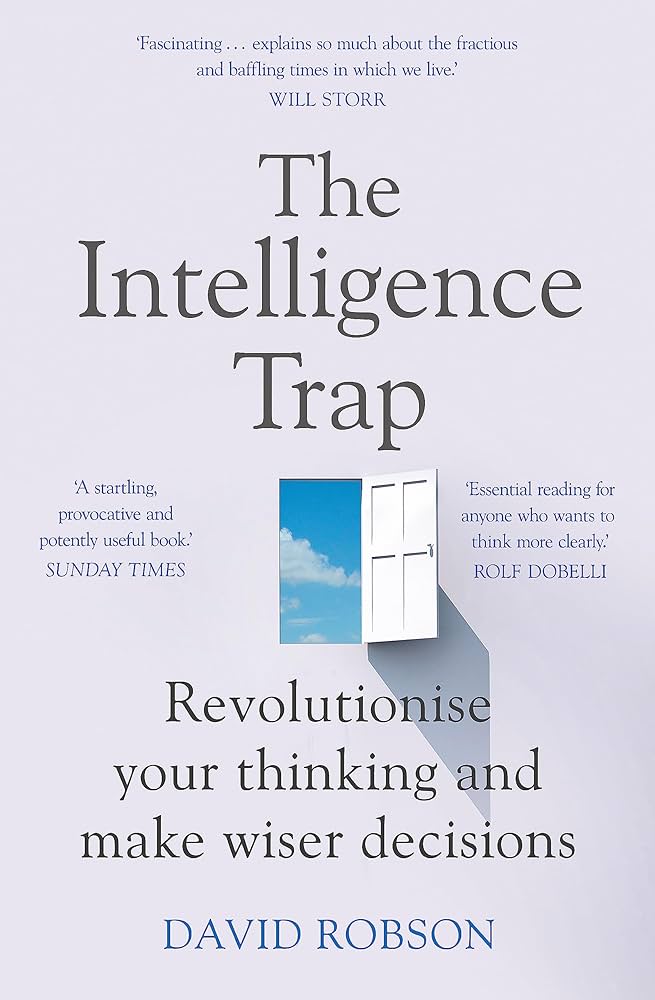
The Intelligence Trap: Why Smart People Make Bad Decisions and How to Make Better Ones explores the surprising gap between intelligence and wise thinking. Journalist and science writer David Robson draws on psychology, neuroscience, and real‑world examples to reveal how cognitive biases, overconfidence, and narrow expertise can lead even highly intelligent people astray.
The book explains why traditional measures of intelligence (like IQ) don’t guarantee good decision‑making and how smart individuals often fall into reasoning errors such as confirmation bias, groupthink, and overanalyzing. Robson offers practical strategies to improve thinking—including how to embrace uncertainty, question assumptions, consider alternatives, and build better mental habits. The Intelligence Trap is both enlightening and accessible, giving readers tools to understand their own thinking and make smarter choices in life, work, and relationships.
David Robson is a British science journalist and author known for writing about psychology, human behavior, and the brain. His work appears in major publications like BBC Future, The Atlantic, and Nature, where he explains complex scientific ideas in engaging, relatable ways. Robson combines rigorous research with compelling storytelling to help readers better understand how the mind works—and how to think more clearly.
 <\/p> \n





 <\/p>
<\/p>