بەها:
{"id":7087,"name":"Probability Theory: The Logic of Science","slug":"probability-theory","date_created":{"date":"2026-02-18 22:10:26.000000","timezone_type":3,"timezone":"Asia\/Baghdad"},"date_modified":{"date":"2026-02-18 22:12:18.000000","timezone_type":3,"timezone":"Asia\/Baghdad"},"status":"publish","featured":false,"catalog_visibility":"visible","description":"
About The Humankind<\/h2>\r\n A Hopeful History presents a bold reinterpretation of human nature, questioning the widespread belief that people are selfish and driven mainly by competition. Drawing on history, psychology, and real-world case studies, Rutger Bregman revisits famous experiments, historical events, and cultural assumptions that have shaped modern views of humanity.<\/p>\r\n
The book argues that cooperation, trust, and kindness have been central to human survival and success. Bregman explores how institutions, media narratives, and social structures often reinforce cynical views of human behavior, while evidence suggests a more hopeful reality. Combining storytelling with research, Humankind<\/em> offers a compelling case for rethinking society, education, and leadership based on trust in human potential.<\/p>\r\n
About the Author Rutger Bregman<\/h2>\r\n Rutger Bregman is a Dutch historian, writer, and public intellectual known for his work on social progress, inequality, and human nature. He has written widely on history, economics, and social change, gaining international recognition for presenting optimistic, evidence-based perspectives on society.<\/p>\r\n
Bregman\u2019s work often challenges conventional thinking about human behavior and the future of social systems. Through his writing and public speaking, he advocates for policies and ideas grounded in trust, cooperation, and long-term thinking, making him one of the most prominent contemporary voices on hopeful social change.<\/p>\r\n\r\n
\u0628\u06d5\u0633\u062a\u06d5\u0631\u06d5\u06a9\u0627\u0646\u06cc \u062f\u0627\u0628\u06d5\u0632\u0627\u0646\u062f\u0646\u06cc \u067e\u06d5\u0631\u062a\u0648\u06a9<\/h3>\r\n\u0641\u0627\u06cc\u0644\u06cc PDF\r\n\u0641\u0627\u06cc\u0644\r\n\u0631\u0627\u06cc\u06af\u0627\u0646<\/h3>\r\n<\/video>","short_description":"\r\n
\r\n
\r\n
\r\n
\r\n
\r\n
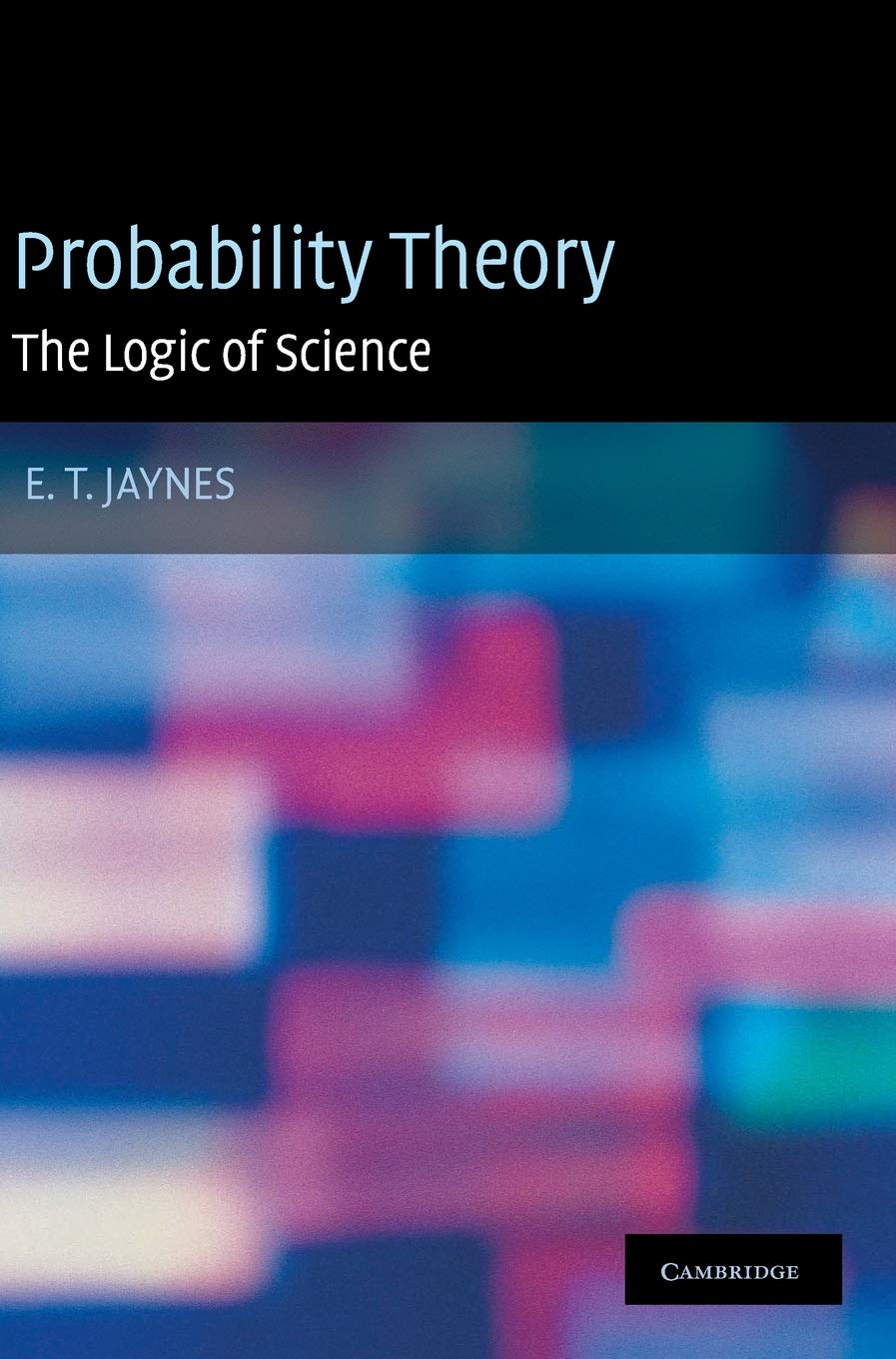
Probability Theory<\/h2>\r\n Probability Theory: The Logic of Science<\/span><\/span> presents probability as a logical system for reasoning under uncertainty. The book shows how probabilistic thinking provides a consistent framework for scientific inference and decision-making.<\/p>\r\n\r\n<\/div>\r\n<\/div>\r\n<\/div>\r\n<\/div>\r\n<\/div>\r\n<\/div>","sku":"","global_unique_id":"","price":"0","regular_price":"0","sale_price":"","date_on_sale_from":null,"date_on_sale_to":null,"total_sales":1,"tax_status":"taxable","tax_class":"","manage_stock":false,"stock_quantity":null,"stock_status":"instock","backorders":"no","low_stock_amount":"","sold_individually":false,"weight":"","length":"","width":"","height":"","upsell_ids":[],"cross_sell_ids":[],"parent_id":0,"reviews_allowed":true,"purchase_note":"","attributes":[],"default_attributes":[],"menu_order":0,"post_password":"","virtual":true,"downloadable":true,"category_ids":[76],"tag_ids":[],"brand_ids":[],"shipping_class_id":0,"downloads":{"c94ece47-4f71-44c1-b4b5-68227282961c":{}},"image_id":"7090","gallery_image_ids":[],"download_limit":-1,"download_expiry":-1,"rating_counts":[],"average_rating":"0","review_count":0,"cogs_value":null,"meta_data":[{"id":58601,"key":"_wp_page_template","value":"default"},{"id":58602,"key":"pweb_metabox","value":{"learnpd-userpanel":"1","video-preview-link":"","video-preview-cover":"","students-course":"","progress-course":"75","prerequisite-course":"","item-course":"","selected-items":"","pd-preview":"https:\/\/pishtaz-web.com","pdsell-count":"","item-pd":[{"item-text":"\u0646\u0633\u062e\u0647 \u0645\u062d\u0635\u0648\u0644","item-response":"1.8.3","item-icon":"fas fa-pager"}]}},{"id":58605,"key":"_elementor_edit_mode","value":"builder"},{"id":58606,"key":"_elementor_template_type","value":"product-post"},{"id":58607,"key":"_elementor_version","value":"3.35.5"},{"id":58608,"key":"_elementor_pro_version","value":"3.35.1"},{"id":58609,"key":"_elementor_data","value":"[{\"id\":\"30602ea\",\"elType\":\"section\",\"settings\":{\"css_classes\":\"content-collapse\",\"ha_cmc_text\":\"Happy Addons\"},\"elements\":[{\"id\":\"4328257\",\"elType\":\"column\",\"settings\":{\"_column_size\":\"100\",\"_inline_size\":null,\"ha_cmc_text\":\"Happy Addons\"},\"elements\":[{\"id\":\"34bf8cd\",\"elType\":\"widget\",\"settings\":{\"editor\":\"About The Probability theory<\\\/h2> In Probability Theory: The Logic of Science<\\\/em>, E. T. Jaynes<\\\/span><\\\/span> develops a comprehensive interpretation of probability as an extension of logic applied to uncertain knowledge. Drawing on Bayesian principles, Jaynes explains how probability can be used to make rational inferences when information is incomplete.<\\\/p>The book combines mathematical rigor with philosophical insight, demonstrating how probabilistic reasoning underlies scientific methodology, statistical inference, and rational decision-making. Jaynes critiques traditional approaches to statistics and offers a unified framework grounded in information theory and logical consistency. Widely regarded as a major contribution to Bayesian probability, the work is valued by scientists, engineers, and researchers seeking a deeper understanding of uncertainty and inference.<\\\/p>
\\u00a0<\\\/p>
About the Author \\u2014 E. T. Jaynes<\\\/h2> E. T. Jaynes<\\\/span><\\\/span> (1922\\u20131998) was an American physicist known for his pioneering work in Bayesian probability and statistical mechanics. A professor at Washington University in St. Louis, Jaynes sought to reformulate probability theory as a general logic of plausible reasoning.<\\\/p>His research connected physics, information theory, and statistics, influencing modern approaches to inference, data analysis, and scientific reasoning. Probability Theory: The Logic of Science<\\\/em> remains his most influential and enduring work.<\\\/p>\",\"column_gap\":{\"unit\":\"px\",\"size\":\"0\",\"sizes\":[]},\"ha_advanced_tooltip_content\":\"I am a tooltip\",\"ha_cmc_text\":\"Happy Addons\"},\"elements\":[],\"widgetType\":\"text-editor\"}],\"isInner\":false}],\"isInner\":false},{\"id\":\"5c11af4\",\"elType\":\"section\",\"settings\":{\"ha_cmc_text\":\"Happy Addons\"},\"elements\":[{\"id\":\"a638148\",\"elType\":\"column\",\"settings\":{\"_column_size\":\"100\",\"_inline_size\":null,\"ha_cmc_text\":\"Happy Addons\"},\"elements\":[{\"id\":\"24306bf\",\"elType\":\"widget\",\"settings\":{\"lessons-part-icon\":{\"value\":\"fas fa-book-open\",\"library\":\"fa-solid\"},\"lessons-part-title\":\"\\u0628\\u06d5\\u0633\\u062a\\u06d5\\u0631\\u06d5\\u06a9\\u0627\\u0646\\u06cc \\u062f\\u0627\\u0628\\u06d5\\u0632\\u0627\\u0646\\u062f\\u0646\\u06cc \\u067e\\u06d5\\u0631\\u062a\\u0648\\u06a9\",\"lessons_list\":[{\"lesson_title\":\"\\u0641\\u0627\\u06cc\\u0644\\u06cc PDF\",\"lesson_icon\":{\"value\":\"far fa-file-pdf\",\"library\":\"fa-regular\"},\"lesson_label\":\"file\",\"lesson_content\":\"






 <\/p>\r\n\r\n
 \r\n\r\n