بەها:
{"id":6826,"name":"How Behavior Spreads: The Science of Complex Contagions","slug":"how-behavior-spreads","date_created":{"date":"2026-02-17 05:56:51.000000","timezone_type":3,"timezone":"Asia\/Baghdad"},"date_modified":{"date":"2026-02-17 10:32:36.000000","timezone_type":3,"timezone":"Asia\/Baghdad"},"status":"publish","featured":false,"catalog_visibility":"visible","description":"
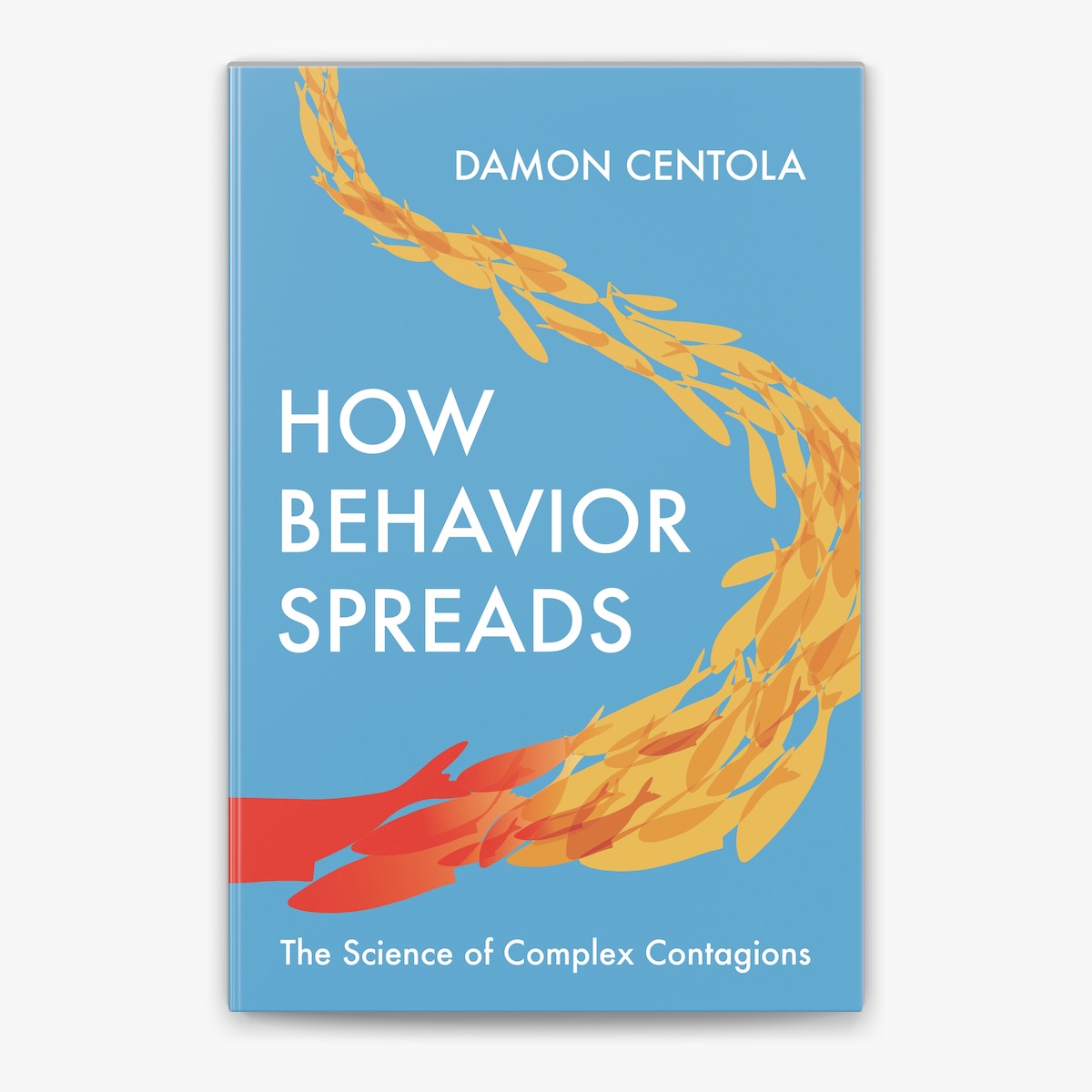
How Behavior Spreads: The Science of Complex Contagions<\/strong> by Damon Centola (Princeton University Press, 2018) is a pioneering exploration of how behaviors\u2014such as adopting health changes, voting, embracing technology, or mobilizing social movements\u2014propagate through social networks. Centola challenges the long-standing assumption that behaviors spread like infectious diseases. Drawing on over ten years of original research, including large-scale online experiments and computational models, he introduces the concept of complex contagions<\/strong>\u2014behaviors that require multiple reinforcing social exposures before people adopt them.<\/p>\r\nConventional theories have emphasized the power of \u201cweak ties\u201d (acquaintances or distant connections) to spread information widely. However, Centola\u2019s findings reveal that these same weak ties can slow<\/em> the adoption of behavior because behavior change usually needs reinforcement from close, overlapping social contacts. The book shows how the structure and design of networks can be used to encourage positive social change\u2014whether encouraging healthy lifestyles, improving organizational practices, or growing grassroots movements. With engaging examples and practical insights, How Behavior Spreads<\/em> is essential for sociologists, public health experts, entrepreneurs, activists, and anyone interested in the science behind social influence and change.<\/p>\r\n <\/p>\r\n\r\n
About\u00a0 Damon Centola<\/h2>\r\n
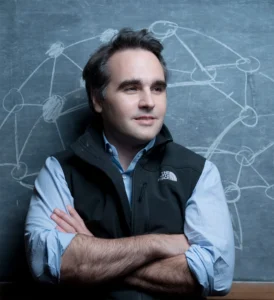
Damon Centola<\/strong> is a leading sociologist, communication scholar, and network scientist. He is the Elihu Katz Professor of Communication, Sociology, and Engineering<\/strong> at the University of Pennsylvania<\/em>, where he directs the Network Dynamics Group<\/strong> and serves as a senior fellow at the Leonard Davis Institute of Health Economics. His work focuses on how social networks shape behavior change and collective action.<\/p>\r\nCentola is best known for his research on complex contagions<\/strong>\u2014the idea that many behaviors spread only through repeated exposure from multiple social contacts, not just through casual connections. His studies combine computational models, web-based experiments, and empirical research, influencing fields from public health to organizational change. His work has been published in top scientific journals and featured in major media outlets such as The New York Times<\/em>, The Washington Post<\/em>, The Wall Street Journal<\/em>, TIME<\/em>, The Atlantic<\/em>, and Scientific American<\/em>.<\/p>\r\nHe has received numerous awards for his contributions to sociology and network science, developed influential modeling tools used across disciplines, and holds a patent for methods that promote the diffusion of desired behaviors through online networks.<\/p>\r\n\r\n
\u0628\u06d5\u0633\u062a\u06d5\u0631\u06d5\u06a9\u0627\u0646\u06cc \u062f\u0627\u0628\u06d5\u0632\u0627\u0646\u062f\u0646\u06cc \u067e\u06d5\u0631\u062a\u0648\u06a9<\/h3>\r\n\u0641\u0627\u06cc\u0644\u06cc PDF\r\n\u0641\u0627\u06cc\u0644\r\n\u0631\u0627\u06cc\u06af\u0627\u0646<\/h3>\r\n \r\n\r\n