بەها:
{"id":7080,"name":"Rationality: What It Is, Why It Seems Scarce, Why It Matters","slug":"rationality","date_created":{"date":"2026-02-18 21:57:54.000000","timezone_type":3,"timezone":"Asia\/Baghdad"},"date_modified":{"date":"2026-02-18 22:02:53.000000","timezone_type":3,"timezone":"Asia\/Baghdad"},"status":"publish","featured":false,"catalog_visibility":"visible","description":"
About The Humankind<\/h2>\r\n A Hopeful History presents a bold reinterpretation of human nature, questioning the widespread belief that people are selfish and driven mainly by competition. Drawing on history, psychology, and real-world case studies, Rutger Bregman revisits famous experiments, historical events, and cultural assumptions that have shaped modern views of humanity.<\/p>\r\n
The book argues that cooperation, trust, and kindness have been central to human survival and success. Bregman explores how institutions, media narratives, and social structures often reinforce cynical views of human behavior, while evidence suggests a more hopeful reality. Combining storytelling with research, Humankind<\/em> offers a compelling case for rethinking society, education, and leadership based on trust in human potential.<\/p>\r\n
About the Author Rutger Bregman<\/h2>\r\n Rutger Bregman is a Dutch historian, writer, and public intellectual known for his work on social progress, inequality, and human nature. He has written widely on history, economics, and social change, gaining international recognition for presenting optimistic, evidence-based perspectives on society.<\/p>\r\n
Bregman\u2019s work often challenges conventional thinking about human behavior and the future of social systems. Through his writing and public speaking, he advocates for policies and ideas grounded in trust, cooperation, and long-term thinking, making him one of the most prominent contemporary voices on hopeful social change.<\/p>\r\n\r\n
\u0628\u06d5\u0633\u062a\u06d5\u0631\u06d5\u06a9\u0627\u0646\u06cc \u062f\u0627\u0628\u06d5\u0632\u0627\u0646\u062f\u0646\u06cc \u067e\u06d5\u0631\u062a\u0648\u06a9<\/h3>\r\n\u0641\u0627\u06cc\u0644\u06cc PDF\r\n\u0641\u0627\u06cc\u0644\r\n\u0631\u0627\u06cc\u06af\u0627\u0646<\/h3>\r\n<\/video>","short_description":"\r\n
\r\n
\r\n
\r\n
\r\n
\r\n
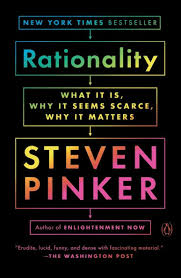
The Rationality<\/h2>\r\n Rationality: What It Is, Why It Seems Scarce, Why It Matters<\/span><\/span> explains how rational thinking works and why it is essential for good judgment in everyday life. The book shows how logic, probability, and scientific reasoning help individuals and societies make better decisions.<\/p>\r\n\r\n<\/div>\r\n<\/div>\r\n<\/div>\r\n<\/div>\r\n<\/div>\r\n<\/div>","sku":"","global_unique_id":"","price":"0","regular_price":"0","sale_price":"","date_on_sale_from":null,"date_on_sale_to":null,"total_sales":1,"tax_status":"taxable","tax_class":"","manage_stock":false,"stock_quantity":null,"stock_status":"instock","backorders":"no","low_stock_amount":"","sold_individually":false,"weight":"","length":"","width":"","height":"","upsell_ids":[],"cross_sell_ids":[],"parent_id":0,"reviews_allowed":true,"purchase_note":"","attributes":[],"default_attributes":[],"menu_order":0,"post_password":"","virtual":true,"downloadable":true,"category_ids":[76],"tag_ids":[],"brand_ids":[],"shipping_class_id":0,"downloads":{"c94ece47-4f71-44c1-b4b5-68227282961c":{}},"image_id":"7085","gallery_image_ids":[],"download_limit":-1,"download_expiry":-1,"rating_counts":[],"average_rating":"0","review_count":0,"cogs_value":null,"meta_data":[{"id":58506,"key":"_wp_page_template","value":"default"},{"id":58507,"key":"pweb_metabox","value":{"learnpd-userpanel":"1","video-preview-link":"","video-preview-cover":"","students-course":"","progress-course":"75","prerequisite-course":"","item-course":"","selected-items":"","pd-preview":"https:\/\/pishtaz-web.com","pdsell-count":"","item-pd":[{"item-text":"\u0646\u0633\u062e\u0647 \u0645\u062d\u0635\u0648\u0644","item-response":"1.8.3","item-icon":"fas fa-pager"}]}},{"id":58510,"key":"_elementor_edit_mode","value":"builder"},{"id":58511,"key":"_elementor_template_type","value":"product-post"},{"id":58512,"key":"_elementor_version","value":"3.35.5"},{"id":58513,"key":"_elementor_pro_version","value":"3.35.1"},{"id":58514,"key":"_elementor_data","value":"[{\"id\":\"30602ea\",\"elType\":\"section\",\"settings\":{\"css_classes\":\"content-collapse\",\"ha_cmc_text\":\"Happy Addons\"},\"elements\":[{\"id\":\"4328257\",\"elType\":\"column\",\"settings\":{\"_column_size\":\"100\",\"_inline_size\":null,\"ha_cmc_text\":\"Happy Addons\"},\"elements\":[{\"id\":\"34bf8cd\",\"elType\":\"widget\",\"settings\":{\"editor\":\"About The Rationality<\\\/h2> In Rationality<\\\/em>, Steven Pinker<\\\/span><\\\/span> explores the nature of rational thought and why it sometimes appears to be in short supply. Drawing on psychology, philosophy, mathematics, and behavioral science, Pinker explains how humans reason about cause and effect, probability, risk, and evidence.<\\\/p>The book examines common cognitive errors and misconceptions that distort thinking, from misunderstandings of statistics to logical fallacies and motivated reasoning. Pinker argues that rationality is not merely an abstract ideal but a practical tool that improves decision-making, cooperation, and social progress. By clarifying how sound reasoning works, Rationality<\\\/em> offers readers a framework for thinking more clearly about complex issues in science, politics, and everyday life.<\\\/p>
About the Author Steven Pinker<\\\/h2> Steven Pinker<\\\/span><\\\/span> is a Canadian-American cognitive psychologist, linguist, and popular science writer. A professor at Harvard University, he is widely known for his work on language, human nature, and the psychology of reasoning and progress.<\\\/p>Through his books and research, Pinker has helped bring scientific insights about the mind and human behavior to a broad audience, becoming one of the most influential contemporary thinkers on rationality, science, and human development.<\\\/p>\",\"column_gap\":{\"unit\":\"px\",\"size\":\"0\",\"sizes\":[]},\"ha_advanced_tooltip_content\":\"I am a tooltip\",\"ha_cmc_text\":\"Happy Addons\"},\"elements\":[],\"widgetType\":\"text-editor\"}],\"isInner\":false}],\"isInner\":false},{\"id\":\"5c11af4\",\"elType\":\"section\",\"settings\":{\"ha_cmc_text\":\"Happy Addons\"},\"elements\":[{\"id\":\"a638148\",\"elType\":\"column\",\"settings\":{\"_column_size\":\"100\",\"_inline_size\":null,\"ha_cmc_text\":\"Happy Addons\"},\"elements\":[{\"id\":\"24306bf\",\"elType\":\"widget\",\"settings\":{\"lessons-part-icon\":{\"value\":\"fas fa-book-open\",\"library\":\"fa-solid\"},\"lessons-part-title\":\"\\u0628\\u06d5\\u0633\\u062a\\u06d5\\u0631\\u06d5\\u06a9\\u0627\\u0646\\u06cc \\u062f\\u0627\\u0628\\u06d5\\u0632\\u0627\\u0646\\u062f\\u0646\\u06cc \\u067e\\u06d5\\u0631\\u062a\\u0648\\u06a9\",\"lessons_list\":[{\"lesson_title\":\"\\u0641\\u0627\\u06cc\\u0644\\u06cc PDF\",\"lesson_icon\":{\"value\":\"far fa-file-pdf\",\"library\":\"fa-regular\"},\"lesson_label\":\"file\",\"lesson_content\":\"






 <\/p>\r\n\r\n
 \r\n\r\n