بەها:
{"id":7072,"name":"The Bias That Divides Us: The Science and Politics of Myside Thinking","slug":"the-bias-that-divides-us","date_created":{"date":"2026-02-18 21:49:53.000000","timezone_type":3,"timezone":"Asia\/Baghdad"},"date_modified":{"date":"2026-02-18 21:56:34.000000","timezone_type":3,"timezone":"Asia\/Baghdad"},"status":"publish","featured":false,"catalog_visibility":"visible","description":"
About The Humankind<\/h2>\r\n A Hopeful History presents a bold reinterpretation of human nature, questioning the widespread belief that people are selfish and driven mainly by competition. Drawing on history, psychology, and real-world case studies, Rutger Bregman revisits famous experiments, historical events, and cultural assumptions that have shaped modern views of humanity.<\/p>\r\n
The book argues that cooperation, trust, and kindness have been central to human survival and success. Bregman explores how institutions, media narratives, and social structures often reinforce cynical views of human behavior, while evidence suggests a more hopeful reality. Combining storytelling with research, Humankind<\/em> offers a compelling case for rethinking society, education, and leadership based on trust in human potential.<\/p>\r\n
About the Author Rutger Bregman<\/h2>\r\n Rutger Bregman is a Dutch historian, writer, and public intellectual known for his work on social progress, inequality, and human nature. He has written widely on history, economics, and social change, gaining international recognition for presenting optimistic, evidence-based perspectives on society.<\/p>\r\n
Bregman\u2019s work often challenges conventional thinking about human behavior and the future of social systems. Through his writing and public speaking, he advocates for policies and ideas grounded in trust, cooperation, and long-term thinking, making him one of the most prominent contemporary voices on hopeful social change.<\/p>\r\n\r\n
\u0628\u06d5\u0633\u062a\u06d5\u0631\u06d5\u06a9\u0627\u0646\u06cc \u062f\u0627\u0628\u06d5\u0632\u0627\u0646\u062f\u0646\u06cc \u067e\u06d5\u0631\u062a\u0648\u06a9<\/h3>\r\n\u0641\u0627\u06cc\u0644\u06cc PDF\r\n\u0641\u0627\u06cc\u0644\r\n\u0631\u0627\u06cc\u06af\u0627\u0646<\/h3>\r\n<\/video>","short_description":"\r\n
\r\n
\r\n
\r\n
\r\n
\r\n
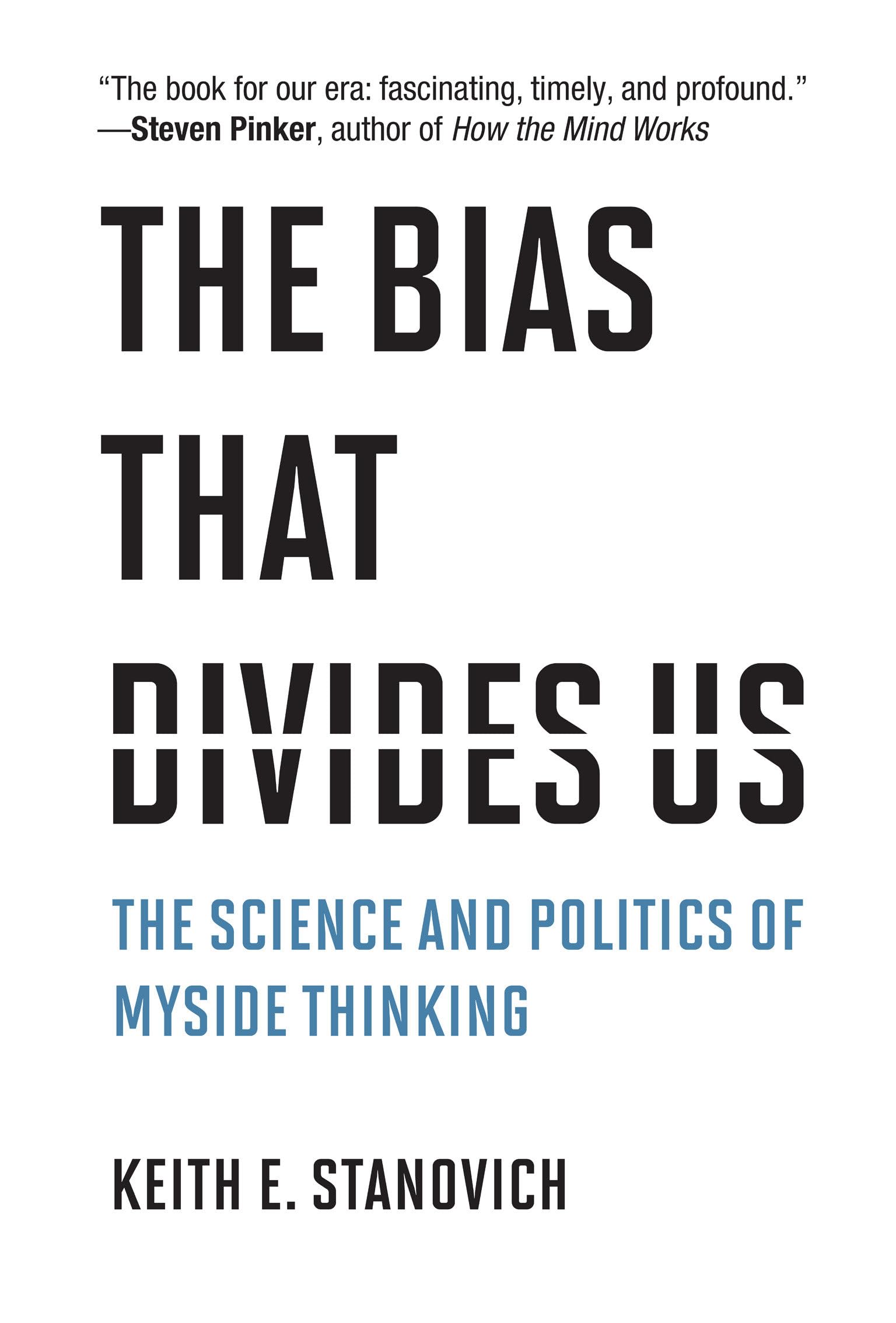
The Bias That Divides Us<\/h2>\r\n The Bias That Divides Us: The Science and Politics of Myside Thinking<\/span><\/span> explains how \u201cmyside bias\u201d leads people to interpret information in ways that confirm their existing beliefs. The book shows how this cognitive tendency fuels political polarization and distorts public reasoning.<\/p>\r\n\r\n<\/div>\r\n<\/div>\r\n<\/div>\r\n<\/div>\r\n<\/div>\r\n<\/div>","sku":"","global_unique_id":"","price":"0","regular_price":"0","sale_price":"","date_on_sale_from":null,"date_on_sale_to":null,"total_sales":1,"tax_status":"taxable","tax_class":"","manage_stock":false,"stock_quantity":null,"stock_status":"instock","backorders":"no","low_stock_amount":"","sold_individually":false,"weight":"","length":"","width":"","height":"","upsell_ids":[],"cross_sell_ids":[],"parent_id":0,"reviews_allowed":true,"purchase_note":"","attributes":[],"default_attributes":[],"menu_order":0,"post_password":"","virtual":true,"downloadable":true,"category_ids":[76],"tag_ids":[],"brand_ids":[],"shipping_class_id":0,"downloads":{"c94ece47-4f71-44c1-b4b5-68227282961c":{}},"image_id":"7078","gallery_image_ids":[],"download_limit":-1,"download_expiry":-1,"rating_counts":[],"average_rating":"0","review_count":0,"cogs_value":null,"meta_data":[{"id":58411,"key":"_wp_page_template","value":"default"},{"id":58412,"key":"pweb_metabox","value":{"learnpd-userpanel":"1","video-preview-link":"","video-preview-cover":"","students-course":"","progress-course":"75","prerequisite-course":"","item-course":"","selected-items":"","pd-preview":"https:\/\/pishtaz-web.com","pdsell-count":"","item-pd":[{"item-text":"\u0646\u0633\u062e\u0647 \u0645\u062d\u0635\u0648\u0644","item-response":"1.8.3","item-icon":"fas fa-pager"}]}},{"id":58415,"key":"_elementor_edit_mode","value":"builder"},{"id":58416,"key":"_elementor_template_type","value":"product-post"},{"id":58417,"key":"_elementor_version","value":"3.35.5"},{"id":58418,"key":"_elementor_pro_version","value":"3.35.1"},{"id":58419,"key":"_elementor_data","value":"[{\"id\":\"30602ea\",\"elType\":\"section\",\"settings\":{\"css_classes\":\"content-collapse\",\"ha_cmc_text\":\"Happy Addons\"},\"elements\":[{\"id\":\"4328257\",\"elType\":\"column\",\"settings\":{\"_column_size\":\"100\",\"_inline_size\":null,\"ha_cmc_text\":\"Happy Addons\"},\"elements\":[{\"id\":\"34bf8cd\",\"elType\":\"widget\",\"settings\":{\"editor\":\"About The\\u00a0bias that divides us<\\\/h2> In The Bias That Divides Us<\\\/em>, Keith E. Stanovich<\\\/span><\\\/span> explores one of the most powerful sources of human error in thinking: myside bias<\\\/strong>, the tendency to evaluate evidence in a way that favors one\\u2019s prior views and identities. Drawing on decades of research in cognitive psychology and decision science, Stanovich explains why intelligence alone does not protect individuals from biased reasoning.<\\\/p>The book examines how myside bias shapes political attitudes, social conflict, and public discourse, often deepening divisions and undermining rational debate. Stanovich distinguishes between intelligence and rationality, arguing that sound judgment requires actively questioning one\\u2019s assumptions and evaluating evidence objectively. Combining scientific insight with real-world relevance, the book offers a clear framework for understanding polarization and improving critical thinking.<\\\/p>
About the Author Keith E. Stanovich<\\\/h2> Keith E. Stanovich<\\\/span><\\\/span> is a Canadian cognitive psychologist known for his influential research on rational thinking, intelligence, and decision-making. He is Professor Emeritus of Applied Psychology and Human Development at the University of Toronto.<\\\/p>Stanovich\\u2019s work focuses on why intelligent people sometimes make irrational decisions and how cognitive biases shape reasoning. Through his research and writing, he has contributed significantly to the scientific understanding of critical thinking and rational judgment.<\\\/p>
\\u00a0<\\\/p>\",\"column_gap\":{\"unit\":\"px\",\"size\":\"0\",\"sizes\":[]},\"ha_advanced_tooltip_content\":\"I am a tooltip\",\"ha_cmc_text\":\"Happy Addons\"},\"elements\":[],\"widgetType\":\"text-editor\"}],\"isInner\":false}],\"isInner\":false},{\"id\":\"5c11af4\",\"elType\":\"section\",\"settings\":{\"ha_cmc_text\":\"Happy Addons\"},\"elements\":[{\"id\":\"a638148\",\"elType\":\"column\",\"settings\":{\"_column_size\":\"100\",\"_inline_size\":null,\"ha_cmc_text\":\"Happy Addons\"},\"elements\":[{\"id\":\"24306bf\",\"elType\":\"widget\",\"settings\":{\"lessons-part-icon\":{\"value\":\"fas fa-book-open\",\"library\":\"fa-solid\"},\"lessons-part-title\":\"\\u0628\\u06d5\\u0633\\u062a\\u06d5\\u0631\\u06d5\\u06a9\\u0627\\u0646\\u06cc \\u062f\\u0627\\u0628\\u06d5\\u0632\\u0627\\u0646\\u062f\\u0646\\u06cc \\u067e\\u06d5\\u0631\\u062a\\u0648\\u06a9\",\"lessons_list\":[{\"lesson_title\":\"\\u0641\\u0627\\u06cc\\u0644\\u06cc PDF\",\"lesson_icon\":{\"value\":\"far fa-file-pdf\",\"library\":\"fa-regular\"},\"lesson_label\":\"file\",\"lesson_content\":\"






 <\/p>\r\n\r\n
 \r\n\r\n