بەها:
{"id":7027,"name":"The Big Picture: On the Origins of Life, Meaning, and the Universe Itself","slug":"the-big-picture","date_created":{"date":"2026-02-18 16:19:23.000000","timezone_type":3,"timezone":"Asia\/Baghdad"},"date_modified":{"date":"2026-02-18 16:27:21.000000","timezone_type":3,"timezone":"Asia\/Baghdad"},"status":"publish","featured":false,"catalog_visibility":"visible","description":"
About The Humankind<\/h2>\r\n A Hopeful History presents a bold reinterpretation of human nature, questioning the widespread belief that people are selfish and driven mainly by competition. Drawing on history, psychology, and real-world case studies, Rutger Bregman revisits famous experiments, historical events, and cultural assumptions that have shaped modern views of humanity.<\/p>\r\n
The book argues that cooperation, trust, and kindness have been central to human survival and success. Bregman explores how institutions, media narratives, and social structures often reinforce cynical views of human behavior, while evidence suggests a more hopeful reality. Combining storytelling with research, Humankind<\/em> offers a compelling case for rethinking society, education, and leadership based on trust in human potential.<\/p>\r\n
About the Author Rutger Bregman<\/h2>\r\n Rutger Bregman is a Dutch historian, writer, and public intellectual known for his work on social progress, inequality, and human nature. He has written widely on history, economics, and social change, gaining international recognition for presenting optimistic, evidence-based perspectives on society.<\/p>\r\n
Bregman\u2019s work often challenges conventional thinking about human behavior and the future of social systems. Through his writing and public speaking, he advocates for policies and ideas grounded in trust, cooperation, and long-term thinking, making him one of the most prominent contemporary voices on hopeful social change.<\/p>\r\n\r\n
\u0628\u06d5\u0633\u062a\u06d5\u0631\u06d5\u06a9\u0627\u0646\u06cc \u062f\u0627\u0628\u06d5\u0632\u0627\u0646\u062f\u0646\u06cc \u067e\u06d5\u0631\u062a\u0648\u06a9<\/h3>\r\n\u0641\u0627\u06cc\u0644\u06cc PDF\r\n\u0641\u0627\u06cc\u0644\r\n\u0631\u0627\u06cc\u06af\u0627\u0646<\/h3>\r\n<\/video>","short_description":"\r\n
\r\n
\r\n
\r\n
\r\n
\r\n
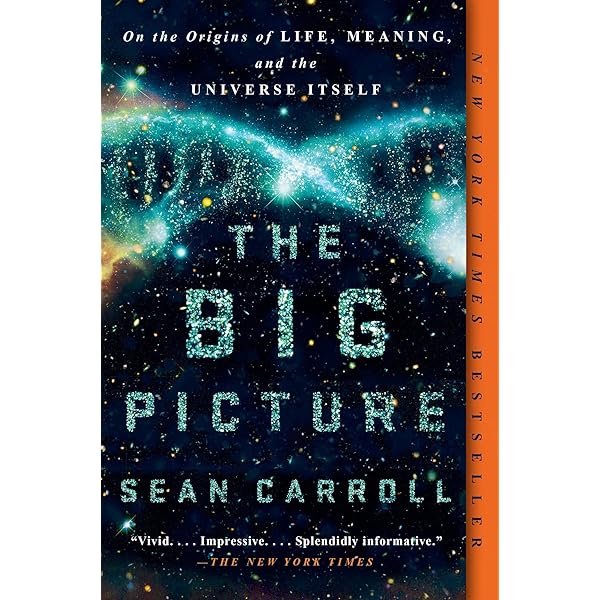
The Big Picture<\/h2>\r\n The Big Picture: On the Origins of Life, Meaning, and the Universe Itself<\/span><\/span> explores how modern science explains reality\u2014from the fundamental laws of physics to the emergence of life, consciousness, and meaning. The book presents a naturalistic worldview grounded in scientific understanding<\/p>\r\n\r\n<\/div>\r\n<\/div>\r\n<\/div>\r\n<\/div>\r\n<\/div>\r\n<\/div>","sku":"","global_unique_id":"","price":"0","regular_price":"0","sale_price":"","date_on_sale_from":null,"date_on_sale_to":null,"total_sales":1,"tax_status":"taxable","tax_class":"","manage_stock":false,"stock_quantity":null,"stock_status":"instock","backorders":"no","low_stock_amount":"","sold_individually":false,"weight":"","length":"","width":"","height":"","upsell_ids":[],"cross_sell_ids":[],"parent_id":0,"reviews_allowed":true,"purchase_note":"","attributes":[],"default_attributes":[],"menu_order":0,"post_password":"","virtual":true,"downloadable":true,"category_ids":[76],"tag_ids":[],"brand_ids":[],"shipping_class_id":0,"downloads":{"c94ece47-4f71-44c1-b4b5-68227282961c":{}},"image_id":"7028","gallery_image_ids":[],"download_limit":-1,"download_expiry":-1,"rating_counts":[],"average_rating":"0","review_count":0,"cogs_value":null,"meta_data":[{"id":57869,"key":"_wp_page_template","value":"default"},{"id":57870,"key":"pweb_metabox","value":{"learnpd-userpanel":"1","video-preview-link":"","video-preview-cover":"","students-course":"","progress-course":"75","prerequisite-course":"","item-course":"","selected-items":"","pd-preview":"https:\/\/pishtaz-web.com","pdsell-count":"","item-pd":[{"item-text":"\u0646\u0633\u062e\u0647 \u0645\u062d\u0635\u0648\u0644","item-response":"1.8.3","item-icon":"fas fa-pager"}]}},{"id":57873,"key":"_elementor_edit_mode","value":"builder"},{"id":57874,"key":"_elementor_template_type","value":"product-post"},{"id":57875,"key":"_elementor_version","value":"3.35.5"},{"id":57876,"key":"_elementor_pro_version","value":"3.35.1"},{"id":57877,"key":"_elementor_data","value":"[{\"id\":\"30602ea\",\"elType\":\"section\",\"settings\":{\"css_classes\":\"content-collapse\",\"ha_cmc_text\":\"Happy Addons\"},\"elements\":[{\"id\":\"4328257\",\"elType\":\"column\",\"settings\":{\"_column_size\":\"100\",\"_inline_size\":null,\"ha_cmc_text\":\"Happy Addons\"},\"elements\":[{\"id\":\"34bf8cd\",\"elType\":\"widget\",\"settings\":{\"editor\":\"About the big Picture<\\\/em><\\\/h2>In The Big Picture<\\\/em>, Sean Carroll<\\\/span><\\\/span> offers a sweeping account of how the universe works and what science can tell us about existence, purpose, and human experience. Drawing on physics, cosmology, philosophy, and biology, Carroll explains how simple physical laws give rise to complex structures such as galaxies, life, and consciousness.<\\\/p>The book presents a coherent naturalistic framework known as poetic naturalism<\\\/strong>, which holds that meaning and values emerge within the scientific description of reality rather than existing outside it. Carroll addresses profound questions about free will, morality, and the nature of existence, showing how scientific knowledge can inform a deeper understanding of humanity\\u2019s place in the cosmos. Thoughtful and accessible, The Big Picture<\\\/em> connects cutting-edge science with timeless philosophical questions.<\\\/p>
About the Author Sean Carroll<\\\/h2> Sean Carroll<\\\/span><\\\/span> is an American theoretical physicist specializing in cosmology and quantum mechanics. He is a professor at Johns Hopkins University and a leading communicator of modern physics and philosophy of science.<\\\/p>Carroll\\u2019s work explores the fundamental laws governing the universe and their implications for time, complexity, and existence. Through his writing, teaching, and public scholarship, he has become widely recognized for making complex scientific ideas accessible to general audiences.<\\\/p>\",\"column_gap\":{\"unit\":\"px\",\"size\":\"0\",\"sizes\":[]},\"ha_advanced_tooltip_content\":\"I am a tooltip\",\"ha_cmc_text\":\"Happy Addons\"},\"elements\":[],\"widgetType\":\"text-editor\"}],\"isInner\":false}],\"isInner\":false},{\"id\":\"5c11af4\",\"elType\":\"section\",\"settings\":{\"ha_cmc_text\":\"Happy Addons\"},\"elements\":[{\"id\":\"a638148\",\"elType\":\"column\",\"settings\":{\"_column_size\":\"100\",\"_inline_size\":null,\"ha_cmc_text\":\"Happy Addons\"},\"elements\":[{\"id\":\"24306bf\",\"elType\":\"widget\",\"settings\":{\"lessons-part-icon\":{\"value\":\"fas fa-book-open\",\"library\":\"fa-solid\"},\"lessons-part-title\":\"\\u0628\\u06d5\\u0633\\u062a\\u06d5\\u0631\\u06d5\\u06a9\\u0627\\u0646\\u06cc \\u062f\\u0627\\u0628\\u06d5\\u0632\\u0627\\u0646\\u062f\\u0646\\u06cc \\u067e\\u06d5\\u0631\\u062a\\u0648\\u06a9\",\"lessons_list\":[{\"lesson_title\":\"\\u0641\\u0627\\u06cc\\u0644\\u06cc PDF\",\"lesson_icon\":{\"value\":\"far fa-file-pdf\",\"library\":\"fa-regular\"},\"lesson_label\":\"file\",\"lesson_content\":\"






 <\/p>\r\n\r\n
 \r\n\r\n